Nothing lasts forever.
Well, usually. Statues crumble. Paint fades. Fortresses fall to dust. It is the human way of things. But quantum mechanics does not play by the usual rules.
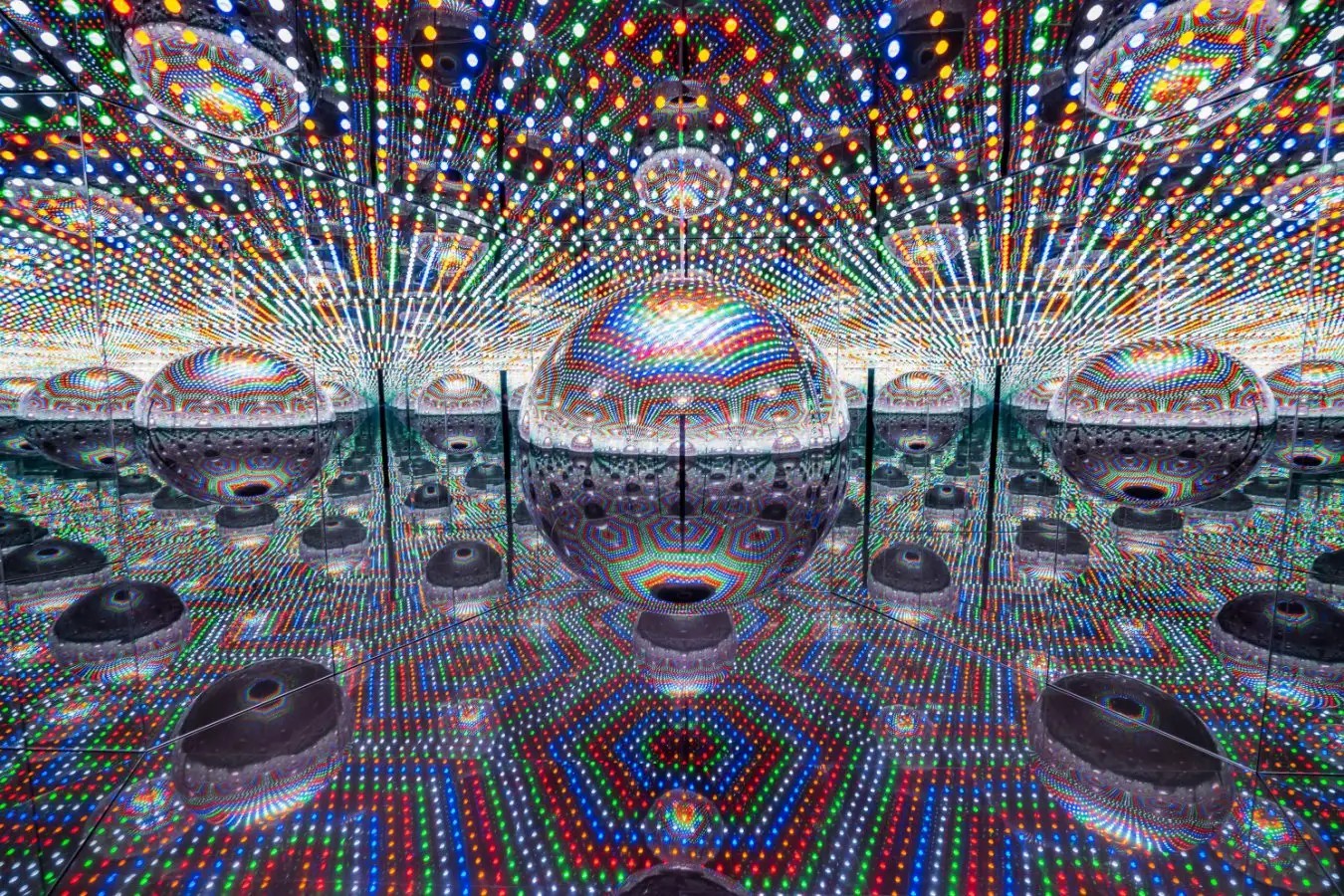
Physicists have been hunting a ghost for nearly seventy years. A state of atoms so perfectly arranged that they freeze time itself. Like light trapped in an infinite hall of mirrors. If such a thing exists it is not just a cool party trick. It would unlock entirely new phases of matter. Perhaps even better quantum computers.
“It would open up a whole new phase of matter,” says Wojciech De Roeck, a mathematical physicist at KU Leuven.
For a long time, physics said no way.
Thermodynamics is strict. It insists that things get messy. You pour milk in coffee. It blends. It becomes beige. Systems thermalise. The details wash out. Chaos is inevitable. So why would any quantum state survive forever?
Philip Anderson thought otherwise in 1958. He looked at a crystal with defects. Impurities. Atoms slightly out of line. He realized electrons bouncing through this mess might scatter so perfectly that they cancel each other out. They would stop. Stuck forever. A frozen quantum state.
He won a Nobel for the idea. But proving it in the real, messy world? That was the hard part.
This is where Many-Body Localisation (MBL) comes in.
The concept seduced physicists. In 2006, three researchers proved mathematically that disordered materials could trap electrons, turning conductors into insulators. No movement. No energy exchange. Frozen.
It promised time crystals. Ultra-precise clocks.
But reality has been skeptical.
The thermal avalanche
Two main arguments keep knocking down MBL. Scale. And time.
Can a tiny patch stay frozen? Sure. Maybe. But thermodynamics allows exceptions in small places. To matter, the freeze needs to hold across a large material. Doubts lingered here.
And time. If you watch a system for a day, does it survive a month?
De Roeck and François Huveneers found a problem in 2018. Disorder is rarely uniform. There are always tiny, neat pockets in a chaotic material. Pockets where particles remain free. They act like seeds. Those free particles feed energy into the frozen zones. A cascade. A thermal avalanche. It sweeps through and destroys the localisation.
Then came the time argument.
In 2024 researchers at the University of Toulouse identified resonances. Atoms in a frozen state might still wiggle slightly. Just a little. If two states happen to match energy exactly, they resonate. They merge. The pristine lock breaks.
So. Was the dream dead?
Experiments suggested otherwise.
Testing eternity
Computer models are limited. They choke around two dozen particles. You cannot simulate eternity with twenty atoms. We need real hardware. Ultracold atoms. Trapped ions. Superconducting qubits. Only recently have these tools become sharp enough to look for the freeze.
In 2025, Junhyeok Hur’s team tested arrays of twenty-four by twenty-four atoms.
“This is an experiment on a timescale larger than simulations can handle,” says Fabien Alet, though he didn’t help the experiment.
Hur compared two types of disorder. Random chaos versus quasi-periodic order.
With random mess, bigger systems needed stronger mess to stay frozen. A sign it would eventually fail at larger scales. But the quasi-random pattern held firm. The threshold barely shifted as size grew.
Amos Chan, a co-worker on the study, notes we don’t fully understand why the random version fails yet. Avalanches? Resonances? Something else?
The data just points to one thing. Localisation persists when you control the disorder. It survives scale.
Google’s quantum group published something similar. They used seventy superconducting qubits.
At moderate disorder the system didn’t fully freeze. But it didn’t melt either. It became a quantum glass. Stuck. Resistant to heat. Not quite MBL, but close enough to suggest the physics is shifting.
Finding the fingerprint
We still need to pin this down. How do we know something is an MBL?
You do not watch iron for ten years to see if it is magnetic. You look for aligned spins.
Alet, LaFlorencice, and others are hunting for an equivalent fingerprint in multifractality.
Imagine every atom’s property plotted on a multi-dimensional map. A normal material explores this terrain. It moves. Changes.
An MBL system? It gets trapped in a patch. Frozen island.
In 2025 David Logan and Sthitadhi proposed a test. Spin the atoms in an up-down pattern. Let the system evolve. Look again. If the pattern washes away, it is just normal matter. If parts of it survive, stubborn and bright, MBL might be there.
“Multifractality is directly connected to what experiments can see,” says David Huse from Princeton.
LaFlorencie is testing this with ultracold atoms now. He thinks they are close to seeing that fractal signature. It is exciting work.
But Huse remains cautious.
Theorems are hard. Big, math-heavy proofs that settle the argument are still waiting in the wings. Maybe years away.
Eternity is a long road to travel.