2025 was a landmark year for space exploration, marked by unprecedented achievements in both private and public sectors. From fully reusable rockets to the first successful private moon landing, the past 12 months shattered records and redefined the future of spaceflight. Here’s a detailed look at the top ten stories that shaped the year.
Private Missions Push Boundaries
The trend toward commercial space ventures accelerated dramatically in 2025. Companies like SpaceX, Blue Origin, and even Chinese firms like Landspace demonstrated capabilities once exclusive to national space programs. This shift isn’t just about efficiency; it signals a broader democratization of space access, raising questions about who controls the final frontier.
10. First Polar Orbit Crewed Flight
SpaceX’s Fram2 mission broke new ground by flying four private astronauts over Earth’s poles in March. This trajectory, historically avoided due to radiation and communication challenges, was executed successfully. While the mission conducted scientific experiments and offered unique planetary views, it also highlights the growing willingness of private entities to push the limits of established protocols.
9. India Joins Elite Docking Club
In January, India successfully completed its first in-space docking with the SpaDex mission, joining the USSR/Russia, the United States, and China as the fourth nation to master this critical technology. This milestone isn’t just symbolic; it demonstrates India’s ambition to become a major space power and lays the foundation for future space station construction and lunar sample returns.
8. Artificial Solar Eclipse Experiment
The European Space Agency’s Proba-3 mission created the first artificial solar eclipse in May, blocking out the sun from one spacecraft’s perspective to study the sun’s corona. This innovative approach bypasses the limitations of rare natural eclipses, offering scientists a controlled environment for detailed solar observation.
Records Broken and New Tech Tested
The year also saw records fall and new technologies tested to their limits. These developments underscore the rapid pace of innovation in the space sector.
7. Suni Williams’ Extended Spacewalk Record
NASA astronaut Suni Williams broke the spacewalk record for female spaceflyers, accumulating 62 hours and 6 minutes of extravehicular activity during an extended stay on the ISS due to Starliner’s technical issues. This unplanned extension allowed her to surpass Peggy Whitson’s previous record, highlighting the adaptability of astronauts and the challenges of early-stage reusable spacecraft programs.
6. China Targets Lunar Fragment with Asteroid Mission
China launched Tianwen 2, its first asteroid sample-return mission, targeting Kamo’oalewa, a “quasi-moon” potentially originating from the moon itself. This ambitious project could provide invaluable insights into lunar origins and the dynamics of near-Earth objects.
5. SpaceX Dominates Launch Frequency
SpaceX reached a new high with 170 launches in 2025, including 165 Falcon 9 flights and five Starship test missions. This unprecedented launch rate, driven largely by the expansion of its Starlink satellite constellation, demonstrates SpaceX’s industrial-scale approach to space access.
4. China Enters Reusable Rocket Race
Landspace’s Zhuque-3 marked China’s first attempt at a reusable orbital rocket, although its initial landing attempt failed. This development signals China’s growing determination to compete in the next generation of space technology.
Breakthroughs in Reusability and Lunar Exploration
The latter half of 2025 witnessed significant advances in reusable rocket technology and the return of lunar exploration. These developments represent critical steps toward sustainable space travel.
3. Blue Origin’s New Glenn Achieves Partial Reusability
Blue Origin’s New Glenn rocket completed its first successful flight, demonstrating partial reusability with a second attempt landing the booster. If fully realized, this capability could significantly lower the cost of heavy-lift launches.
2. SpaceX Starship Achieves Consistent Success
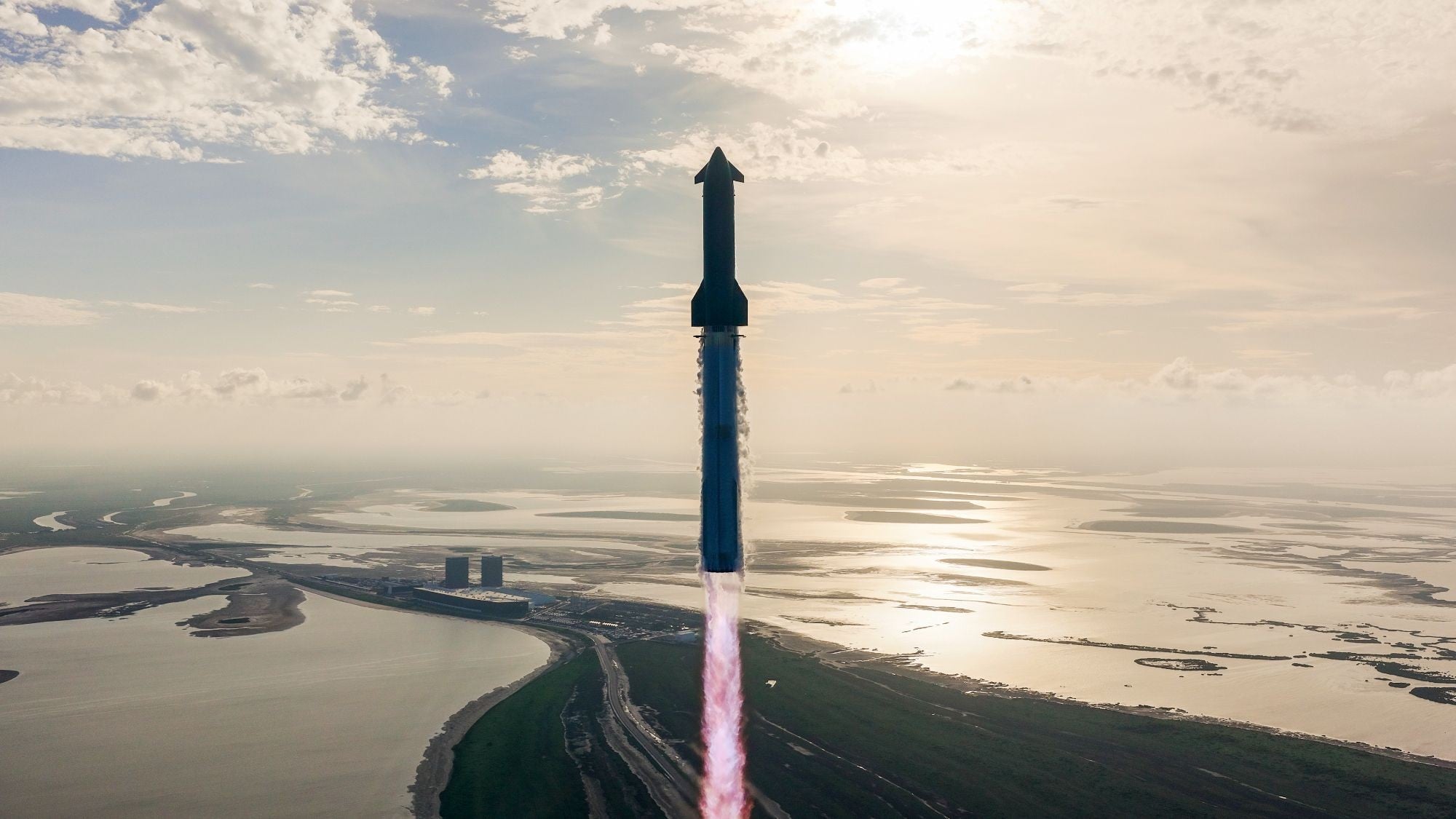
SpaceX’s Starship achieved two consecutive successful test flights in August and October, with both stages landing safely. This milestone proves that the fully reusable megarocket is closer to operational status. In-space refueling and orbital missions remain key hurdles, but the current trajectory is promising.
1. Private Lunar Landing Achieved
Firefly Aerospace’s Blue Ghost lander successfully touched down on the moon in March, marking the first successful private moon landing. This achievement validates NASA’s Commercial Lunar Payload Services (CLPS) program, paving the way for more private missions and potentially future lunar settlements.
The success of Blue Ghost underscores a fundamental shift: space exploration is no longer solely the domain of governments. Private companies are now driving innovation and opening the door to a new era of lunar research and commercialization.
The events of 2025 have laid the groundwork for an even more ambitious future in space, with both private and public sectors accelerating toward new frontiers.