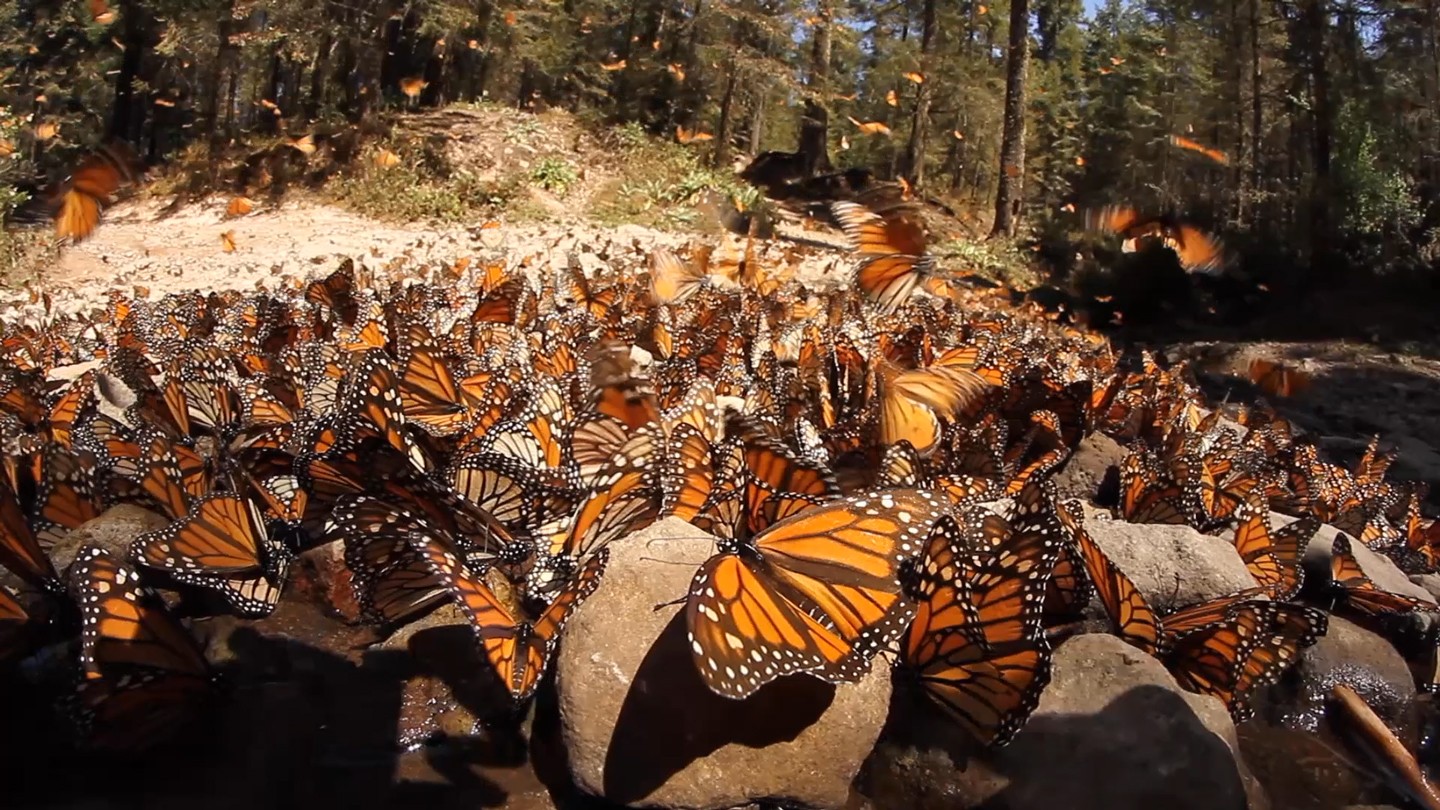
Climate change poses a growing threat to the spectacular annual migration of monarch butterflies across North America. Researchers predict that shifting climate conditions could shorten suitable habitat in Mexico, potentially disrupting the butterflies’ multi-generational journey and, crucially, altering the migration itself rather than driving the species toward extinction.
The Monarch Migration at Risk
Every year, millions of monarchs ( Danaus plexippus ) undertake a remarkable round-trip migration spanning thousands of kilometers. They leave breeding grounds in Canada and the United States in the fall to overwinter in mountainous regions of central Mexico. As temperatures rise in spring, subsequent generations continue the cycle northward, following the availability of milkweed ( Asclepias ), the only plant their caterpillars eat and where females lay eggs.
However, a new study published in PLOS Climate on February 25th warns that changing temperatures could shift optimal overwintering habitat further south within Mexico. This would extend an already taxing journey, increasing energy expenditure for the insects.
Migration vs. Extinction
The core concern isn’t necessarily the survival of the species, but the survival of the migration itself. Biologist Carolina Ureta of the National Autonomous University of Mexico suggests that some monarchs might simply choose to remain in Mexico instead of continuing north if the return journey becomes too energetically demanding.
“In this case, the species is not in danger because of climate change, but the migration might be.”
This is significant because while monarch populations have already declined by over 80% since the 1990s—due to habitat loss, extreme weather, pesticides, and parasites—the migration is a unique ecological phenomenon. Other monarch populations worldwide do not undertake such long-distance movements.
Habitat Decline & Future Projections
Researchers used computer simulations to model future milkweed distribution under various climate scenarios. The results indicate a potential decline in suitable habitat from approximately 19,500 square kilometers today to around 8,000 square kilometers by 2070. This contraction, combined with a southward shift in optimal conditions, could fragment the migratory route.
Monitoring Migratory Behavior
Scientists believe that observing wing size could help determine if monarchs are settling permanently in regions outside their traditional migratory pathways. Resident butterflies in other parts of the world tend to have smaller wingspans than those that migrate. This simple metric could provide valuable insight into how climate change is altering monarch behavior.
The future of the monarch migration is uncertain, but the potential loss of this iconic natural event underscores the broader impacts of climate change on complex ecosystems. The study highlights a subtle, yet critical, consequence: the transformation of migratory patterns, even if species survival isn’t immediately threatened.