


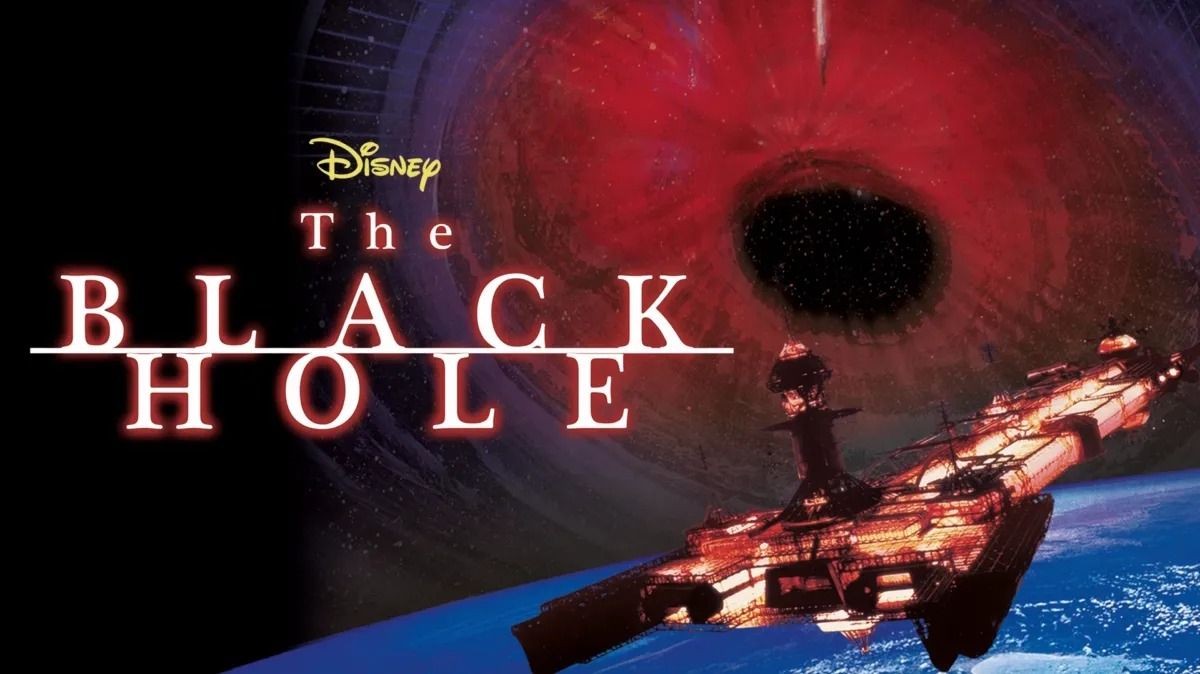
In an era dominated by Star Wars, Disney attempted to launch its own interstellar blockbuster in 1979 with “The Black Hole.” The result was a bizarre, tonally inconsistent film that underperformed at the box office and remains a curious footnote in the studio’s history. While Disney now owns Star Wars, its early attempt to compete with George Lucas’s space opera was a miscalculation that highlights a period of uncertainty within the company following Walt Disney’s death.
The Space Race: Disney’s Late Entry
The late 1970s saw Hollywood scrambling to capitalize on Star Wars ‘ success. Studios rushed to create their own space-themed adventures, from the campy Flash Gordon to the more serious Star Trek: The Motion Picture. Disney, however, found itself out of step. Before its current dominance through acquisitions like Marvel and Pixar, the studio struggled to define its identity, caught between animated classics and inconsistent live-action projects.
The original concept for “The Black Hole,” initially titled “Space Station One,” began as a disaster movie in the vein of The Towering Inferno. As Star Wars took off, Disney pivoted, attempting to graft a space opera onto the existing script. This decision led to a film that felt disjointed, blending elements of hard science fiction with cartoonish robots and bizarre character dynamics.
A Confused Production
The film’s production was plagued by uncertainty. Director Gary Nelson initially rejected the project, unimpressed with the unfinished script. He was eventually swayed by Peter Ellenshaw’s production paintings, showcasing the visually striking USS Cygnus, a spaceship that stood out despite the film’s other flaws.
The cast included Robert Forster, Anthony Perkins, and Ernest Borgnine in an unusual role as a journalist aboard a spaceship. The film also featured two robots: VINCENT, voiced by Roddy McDowall, and Old BOB, voiced by Slim Pickens. These characters, combined with a confusing plot involving a missing research vessel and a scientist obsessed with entering a black hole, created a film that baffled audiences.
A Nightmarish Finale
The most infamous aspect of “The Black Hole” is its ending. The original script lacked a conclusion, forcing filmmakers to improvise a sequence that borrowed from 2001: A Space Odyssey but veered into surreal horror. The climax features the ship entering the black hole, followed by an abrupt transition to a literal depiction of heaven and hell, complete with angelic figures and a scientist trapped inside a robot in a fiery landscape.
This bizarre ending, combined with the film’s overall tonal inconsistency, alienated critics and audiences. Despite a marketing push that included action figures, “The Black Hole” failed to match the success of Star Wars or even Star Trek.
A Lesson Learned
Disney’s attempt to replicate the Star Wars formula proved disastrous. The studio later acquired Lucasfilm, effectively owning the very franchise it once tried to compete with. “The Black Hole” remains a cautionary tale—a reminder that simply copying a successful formula doesn’t guarantee success. The film’s failure underscored Disney’s need for stronger creative direction and eventually led to a more aggressive strategy of acquiring established franchises rather than trying to create new ones from scratch.
In the end, Disney learned the hard way that some cosmic curiosities are best left unexplored.


