The dream of establishing permanent human settlements beyond Earth faces a fundamental biological challenge: reproduction in space is significantly impaired by microgravity. A new study published in Communications Biology reveals that sperm navigation, fertilization rates, and early embryo development all suffer under simulated zero-gravity conditions, raising serious questions about the feasibility of long-term space colonization.
The Core Problem: Disoriented Sperm and Impaired Development
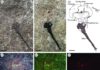
Researchers from Adelaide University conducted experiments using human, mouse, and pig reproductive cells to mimic the effects of space travel. The results were consistent across species: sperm struggled to navigate toward eggs in microgravity, mouse eggs experienced lower fertilization success, and pig embryos showed developmental delays.
This isn’t just a theoretical concern. Successful reproduction is critical for any permanent off-world colony. Without it, long-term settlements would be entirely dependent on resupply from Earth – an unsustainable proposition for Mars or the Moon.
How Gravity Impacts Reproduction
The study points to a key mechanism: gravity plays an active role in cellular processes. Sperm rely on mechanosensors – molecular devices that detect physical forces – to orient themselves and swim toward the egg. Removing gravity disrupts these sensors, leading to disorientation. The female reproductive tract also uses gravitational cues for proper implantation and embryo development.
Researchers attempted to counteract these effects by introducing high concentrations of progesterone, a hormone that normally guides sperm. While it showed some benefit, the doses required were far higher than natural levels, raising safety concerns. The body’s natural systems are clearly designed to function within Earth’s gravitational field.
Implications for Space Colonization
This research isn’t just about sex in space; it highlights a deeper truth. Life on Earth has evolved under the constant influence of gravity. From the movement of cells to the formation of organs, gravity is deeply embedded in biological processes. Ignoring this fundamental factor could doom attempts to build self-sustaining colonies elsewhere.
The findings also shed light on how gravity works on Earth. The study’s authors suggest that the importance of gravity in reproduction has been underestimated.
“Gravity is not just a backdrop to life; it is deeply embedded in the biological processes that create it,” says Nicole McPherson, the study’s senior author.
Overcoming these hurdles will require advanced technologies, such as artificial gravity systems, or perhaps even genetic engineering to adapt human reproduction to zero-gravity environments. Until then, the dream of a multi-planetary future remains firmly grounded in Earth’s gravitational pull.