Imagine biting into a warm piece of cake and having a built-in sensor tell you exactly when it has reached the perfect temperature—not too hot to burn your mouth, but just warm enough to maintain its texture. This concept, once relegated to the realm of science fiction, is becoming a reality through a breakthrough in ingestible electronics.
Researchers have developed a fully edible device capable of harvesting heat from food to power itself, providing real-time temperature monitoring without the need for traditional, non-edible batteries.
The Challenge: Making Food Functional
The field of “edible electronics” has seen rapid growth, with applications ranging from personalized healthcare and drug delivery to eco-friendly sensors. However, the technology has long faced a fundamental physical hurdle: mechanical robustness.
Most edible materials, such as standard gelatin, are too fragile for functional use; they collapse easily under handling. Furthermore, integrating electronic capabilities—like sensing temperature—into a material that must remain safe to swallow has proven incredibly difficult. Most existing thermoelectric systems (which convert heat into electricity) rely on inorganic, non-edible components that would be unsafe for consumption.
The Innovation: A Self-Sustaining Hydrogel System
A research team from the École Polytechnique Fédérale de Lausanne (EPFL) has addressed these hurdles by rethinking the very chemistry of food-based materials. Their approach, recently published in Advanced Functional Materials, focuses on three key innovations:
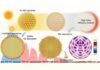
- Structural Strength through Flavor: To solve the fragility problem, the team used chitosan (an edible biopolymer) and strengthened it through “covalent crosslinking” with vanillin —the molecule responsible for vanilla flavor. This creates a hydrogel that is significantly sturdier than common food gels while remaining completely edible.
- Harvesting Energy from Heat: Instead of using a battery, the device uses a thermoelectric generator. By using two different types of hydrogels (chitosan-based and alginate-based) loaded with salts, the device creates a flow of ions. When a temperature difference exists—such as the heat from a freshly baked cake—the device harvests that thermal energy to generate electricity.
- A Visual Feedback Loop: The electricity generated is used to power an edible electrochromic display. Using anthocyanins (natural pigments found in fruits), the device changes color when voltage is applied, providing a clear visual indicator of the food’s temperature.
Real-World Application: The “Perfect Bite”
To test the system, researchers embedded the device in a cake designed to be eaten with a molten center. As the cake cooled, the edible display transitioned to a blue color, signaling that the dessert had reached an optimal temperature: safe to eat without risk of burns, yet still maintaining its intended texture.
Potential Use Cases
This technology could transform how we interact with the food supply chain:
* Consumer Safety: Preventing burns in vulnerable populations, such as infants.
* Food Quality Control: Monitoring the “doneness” of food during cooking.
* Logistics and Storage: Tracking the temperature of frozen goods during transport to ensure they remain within safe limits.
The Road Ahead
While groundbreaking, the technology is not yet universal. The primary challenge moving forward is expanding the temperature range. Currently, the sensors are optimized for warm foods; future iterations will need to function at much lower temperatures to monitor frozen goods and cold storage effectively.
Conclusion
By turning food itself into a power source, researchers have bridged the gap between nutrition and technology. This advancement paves the way for a future where smart, self-powered sensors can seamlessly integrate into our diet to enhance safety and quality throughout the entire food supply chain.