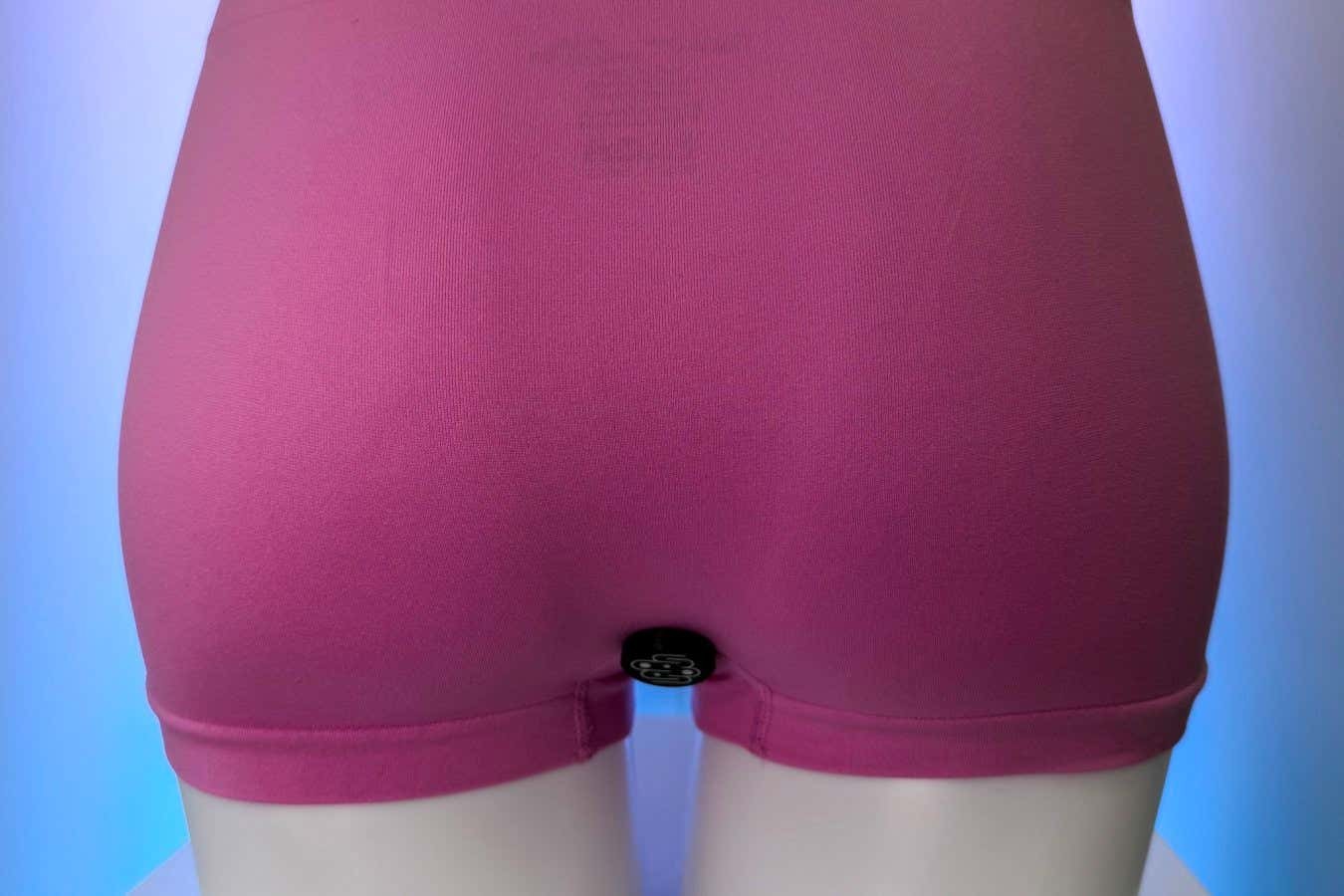
Most people believe they are experts on their own bodily functions, particularly regarding flatulence. However, new research suggests that human self-reporting on gas production is notoriously unreliable—essentially a coin flip. To solve this, researchers have developed a discreet, hydrogen-detecting sensor that clips onto underwear, offering an objective way to diagnose conditions like lactose intolerance.
The Problem with Self-Reporting
Lactose intolerance is a common condition where the body lacks the enzyme lactase, necessary to break down the sugar in dairy. When undigested lactose reaches the colon, gut bacteria ferment it, producing hydrogen gas. This leads to bloating and frequent flatulence.
Yet, a significant barrier to diagnosis is that approximately one-third of people with lactose intolerance do not report symptoms. Often, they are simply unaware of how often they are passing gas. This gap between physiological reality and personal perception creates a challenge for clinicians trying to diagnose gastrointestinal issues based on patient history alone.
Enter the “Smart Underwear” Sensor
Brantley Hall from the University of Maryland and his team have engineered a solution: a small, non-invasive hydrogen sensor. The device, roughly the size and thickness of a couple of coins, clips onto underwear near the perineum. It detects hydrogen—a key byproduct of lactose fermentation—allowing for precise tracking of flatulence frequency without the embarrassment or inaccuracy of manual counting.
The technology aims to move beyond subjective patient accounts, providing doctors with hard data on intestinal gas production. This could be pivotal not just for lactose intolerance, but for diagnosing irritable bowel syndrome (IBS) and evaluating the effectiveness of medications designed to reduce gut gas.
The Study: Data vs. Perception
To test the device, the researchers conducted a double-blind study involving 37 participants. The process was rigorous:
- Baseline Establishment: Participants followed a low-fiber diet for two days to minimize microbiome activity and establish a baseline for their normal gas output.
- Sugar Challenge: On the third and fourth mornings, participants consumed either 20 grams of lactose or 20 grams of sucrose (table sugar). Neither the participants nor the researchers knew which sugar was administered on which day.
- Measurement: The smart underwear tracked hydrogen emissions throughout the day following each sugar consumption.
The results highlighted a stark contrast between biological data and human perception. Among the 24 participants identified as lactose-sensitive by the device:
* Objective Data: These individuals farted more than 1.5 times their baseline frequency after consuming lactose. In 22 of these cases, the spike in gas directly correlated with the day they consumed lactose.
* Subjective Guessing: When asked to identify which day they were gassier, participants only guessed correctly 50% of the time.
“It’s literally like a coin flip,” Hall noted. “People aren’t reliable narrators about their flatulence patterns.”
Why This Matters for Gastrointestinal Health
This study underscores a critical trend in modern medicine: the shift from subjective symptom reporting to objective digital biomarkers. While patients feel bloated or uncomfortable, they lack the precision to quantify their symptoms. This sensor provides that missing link.
Tom van Gils, a researcher at the University of Gothenburg in Sweden, praised the approach. “Measuring flatulence right where the gas leaves the body by using non-invasive smart-underwear is interesting, especially given the good acceptability of the technique,” he said. He added that while the sensation of gas is a valid symptom, objective measures can reveal more about the underlying physiological changes in gastrointestinal disorders.
Establishing a New Baseline
Beyond diagnosing intolerance, this technology helps establish a broader understanding of human digestion. Previous work by Hall’s team indicated that healthy adults pass gas between four and 59 times a day, with an average of 32. However, Hall cautions that this number may be skewed high because early studies likely attracted participants who were already concerned about excessive gas.
Future research aims to refine these baselines, mapping out exactly how different foods impact flatulence across the general population. By removing the guesswork, smart sensors could lead to more accurate diagnoses and better-managed digestive health.
Conclusion:
This technology demonstrates that our internal sensors are often out of sync with our external reality. By replacing anecdotal evidence with precise data, smart underwear offers a practical, non-invasive tool for diagnosing common digestive issues that patients themselves often miss.