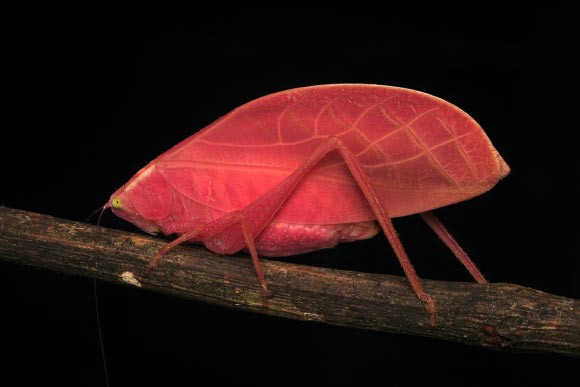
Researchers have discovered that a species of tropical bush cricket in Panama, Arota festae, undergoes a striking color change from vibrant pink to green, likely as an evolved survival tactic. The insect’s initial pink hue isn’t a rare genetic flaw, but rather a sophisticated form of camouflage mirroring the color progression of young rainforest leaves.
The Mystery of the Pink Katydid
For decades, sightings of bright pink Arota festae katydids were considered oddities – possibly disadvantageous mutations in a green-dominant environment. The species, native to Panama, Colombia, and Suriname, is typically a light green color with leaf-like forewings. But observations at the Smithsonian Tropical Research Institute on Barro Colorado Island revealed something more complex.
From Hot Pink to Invisible Green
In March 2025, entomologist Benito Wainwright and his team spotted an intensely pink female katydid. Instead of being a flaw, this insect slowly faded from hot pink to pastel pink over four days, before fully transitioning to green within another week. This is the first documented case of a katydid completing such a dramatic color shift within a single life stage.
Why Pink? The Rainforest’s Hidden Logic
The key is the rainforest itself. Many leaves flush red or pink as they emerge before maturing into green. The katydid’s early pink phase seems perfectly timed to mimic these young leaves, effectively hiding in plain sight. As the leaves green, so does the insect, maintaining its camouflage.
“You would think that a bright pink insect in a mostly green forest would stand out… The idea that an insect might gradually shift color to keep pace with the leaves it mimics shows how dynamic the rainforest can be.” – Dr. Matt Greenwell, University of Reading.
A Reminder of Nature’s Complexity
This discovery underscores just how finely tuned some animals are to their environments. The Arota festae isn’t just blending in; it’s actively tracking the changing colors of its surroundings. The results were published in March 2026 in the journal Ecology. This case highlights the power of natural selection in shaping remarkable adaptations in even the most complex ecosystems.