


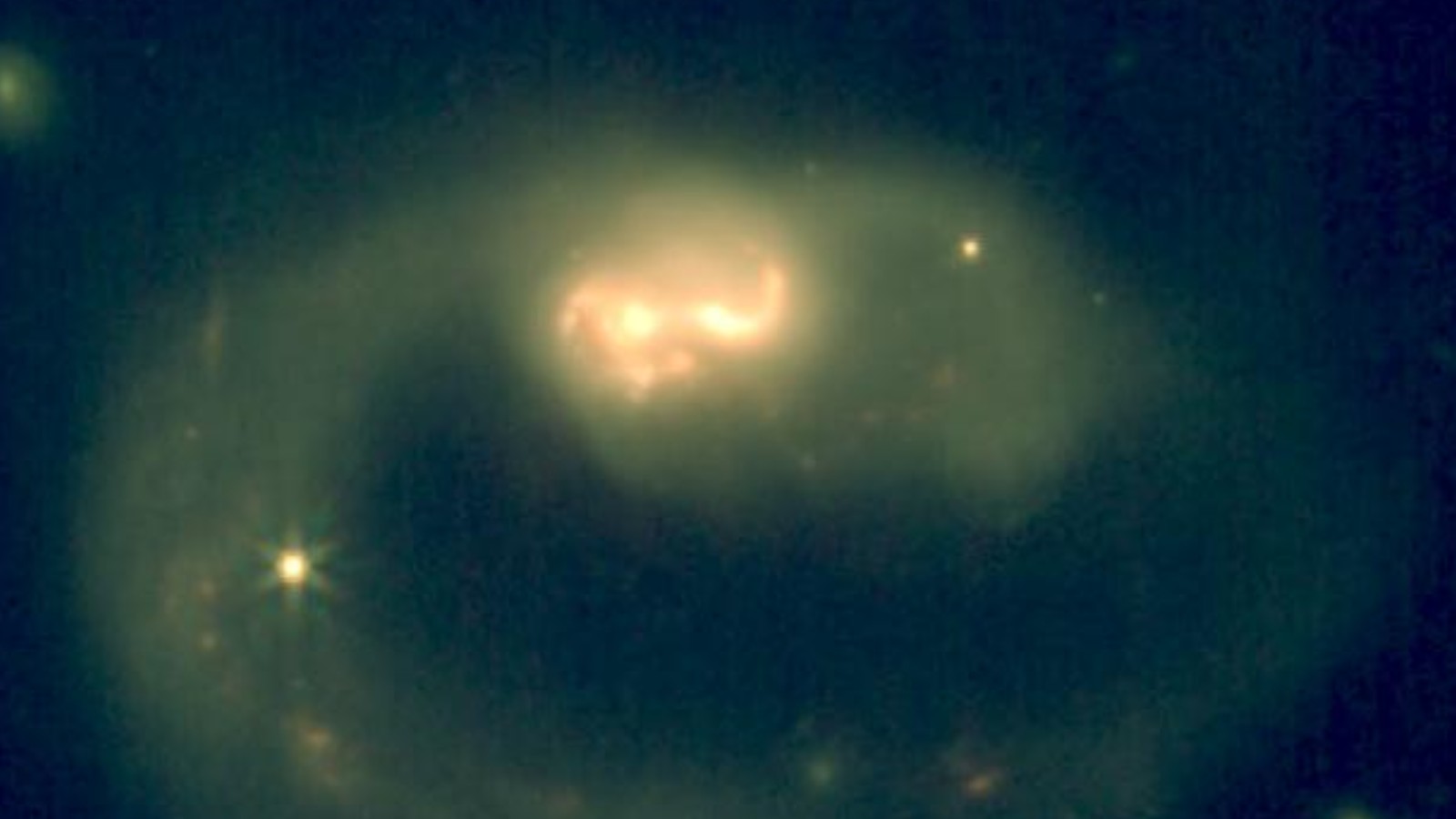
Astronomers using the James Webb Space Telescope (JWST) have discovered a surprising abundance of organic molecules, essential precursors to life, within the heart of a nearby galaxy. This finding challenges current theories about how complex carbon-based compounds form in extreme galactic environments and hints at a universe potentially rich in the raw materials for life’s emergence.
Unveiling the Galactic Core
The research focused on IRAS 07251–0248, an ultra-luminous infrared galaxy shrouded in dense dust and gas. This obscuration makes the galaxy invisible to most telescopes, but JWST’s infrared capabilities allowed scientists to peer through the cosmic haze. The team utilized JWST’s Near InfraRed Spectrograph (NIRSpec) and Mid-Infrared Instrument (MIRI) to analyze the galaxy’s chemical composition.
Unexpected Chemical Complexity
The results were striking: the galaxy harbors a chemical richness far exceeding predictions. “We found an unexpected chemical complexity, with abundances far higher than predicted by current theoretical models,” stated Ismael García Bernete, lead researcher at the Center for Astrobiology (CAB). This suggests a continuous and potent source of carbon is fueling the formation of these molecules within the galaxy’s core.
The team identified a diverse array of small organic molecules, including benzene, methane, acetylene, and highly reactive compounds like the methyl radical—detected outside the Milky Way for the first time. Solid materials, such as carbon-based grains and water ice, were also present.
Implications for Life’s Origins
While these molecules aren’t directly found in living cells, they are critical stepping stones in prebiotic chemistry. “Although small organic molecules are not found in living cells, they could play a vital role in prebiotic chemistry, representing an important step towards the formation of amino acids and nucleotides,” explained Dimitra Rigopoulou of the University of Oxford. This discovery reinforces the idea that galactic nuclei may serve as molecular factories, churning out the building blocks of life.
Cosmic Rays and Molecular Fragmentation
The team proposes that high-energy cosmic rays could be breaking down larger carbon-rich grains into smaller organic molecules, driving this chemical abundance. This fragmentation process, combined with intense galactic activity, would create a sustained supply of the necessary materials.
These findings suggest that heavily obscured galactic nuclei like IRAS 07251–0248 might be widespread chemical production lines, enriching their surrounding systems with the foundations of life. The discovery underscores how common the basic ingredients for life may be in the universe, even in its most extreme environments.


