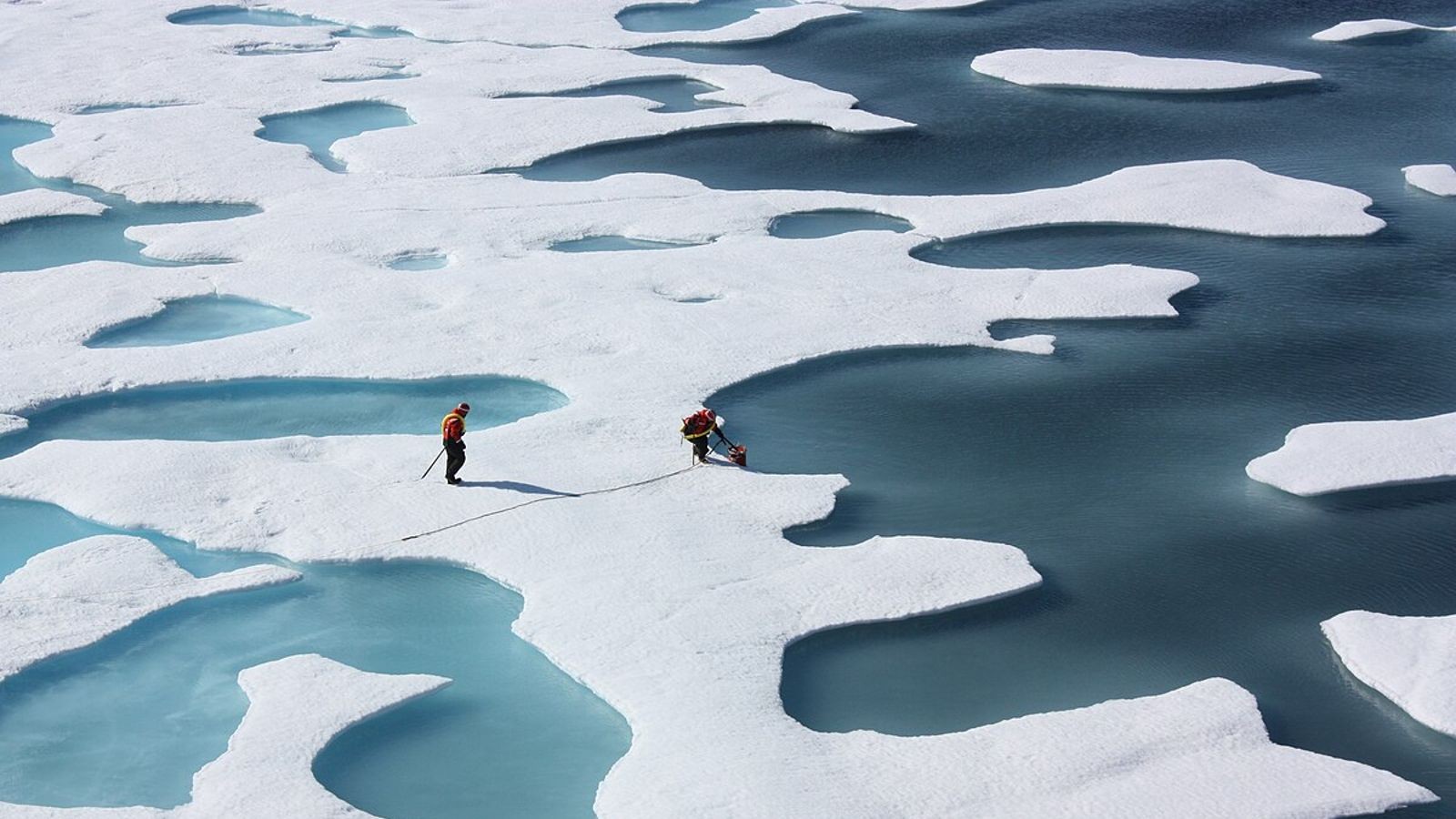
As global temperatures rise, the physical landscape of Antarctica is undergoing a profound transformation. A new study published in Nature Climate Change warns that the retreating ice sheets could expose a massive expanse of land—comparable to the size of Pennsylvania—by the year 2300. While this represents a significant geographical shift, it also uncovers a potential catalyst for international conflict: vast, untapped reserves of precious and industrial metals.
The Science of Rising Land
Historically, scientific projections regarding ice-free land in Antarctica focused primarily on the shifting margins of the ice. However, this new research, led by geophysicist Erica Lucas of the University of California, Santa Cruz, introduces a critical variable: glacial isostatic adjustment.
When massive, heavy ice sheets melt, the immense pressure they exert on the Earth’s crust is removed. This allows the land beneath to “rebound” or uplift. By accounting for this uplift, along with sea-level changes and the thickness of the Earth’s lithosphere, the study provides a much more accurate picture of the continent’s future:
- High-melt scenario: Approximately 120,610 square kilometers of land could emerge.
- Medium-melt scenario: Roughly 36,381 square kilometers could be exposed.
- Low-melt scenario: At least 149 square kilometers are expected to emerge.
A Treasure Map Beneath the Ice
The emergence of this land is not merely a matter of geography; it is a matter of economy. The areas projected to become ice-free are believed to contain significant deposits of:
– Precious metals: Gold and silver.
– Industrial minerals: Copper and iron.
– Critical resources: Platinum, essential for modern manufacturing and high-tech industries.
Crucially, the study notes that the largest areas of projected land emergence overlap with territories currently claimed by Argentina, Chile, and the United Kingdom. This overlap creates a direct link between environmental change and territorial disputes.
The Legal Battleground: The Antarctic Treaty
Currently, Antarctica is governed by a strict legal framework. Under the Antarctic Treaty, commercial mining and mineral extraction are strictly prohibited; resources may only be accessed for scientific research.
However, the stability of this agreement may face its greatest test in the coming decades. The study suggests that as mineral resources become more accessible due to melting ice, nations with territorial claims may feel increased pressure to renegotiate the treaty’s terms.
The first major opportunity for such a shift arrives in 2048, when signatories to the Antarctic Treaty are permitted to review the environmental protocol.
Balancing Extraction and Protection
While the potential for a “gold rush” is real, legal experts urge caution. Tim Stephens, a professor of international law at the University of Sydney, notes that while the emergence of new land is a significant factor, it may not be enough to overturn the current governance on its own. He points out two major hurdles:
1. Extreme Environment: Antarctica remains one of the most hostile and logistically difficult places on Earth for industrial operations.
2. Environmental Mandate: The transformation of the continent could actually strengthen the resolve of the international community to prioritize environmental protection over exploitation.
The emergence of new land in Antarctica creates a tension between the continent’s role as a scientific preserve and its potential as a resource frontier.
Conclusion
The melting of Antarctic ice is transforming the continent from a frozen wasteland into a potential source of critical global minerals. This shift will likely force the international community to decide whether Antarctica remains a protected scientific sanctuary or becomes a new arena for resource competition.