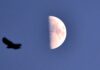
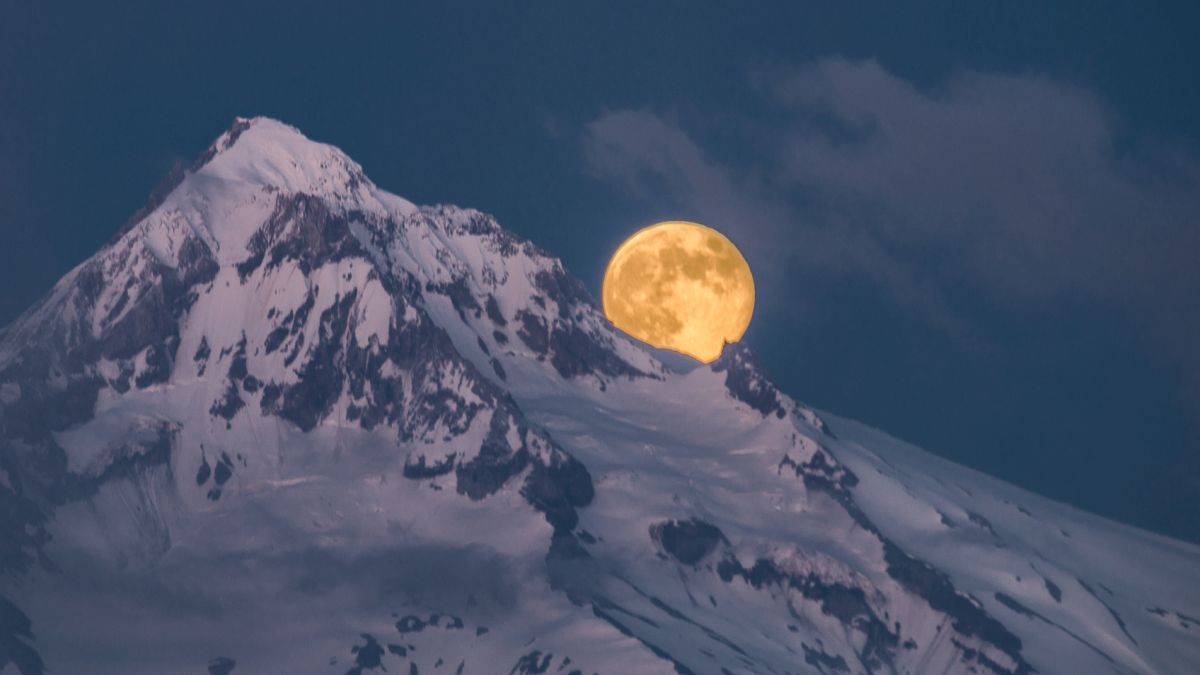
The final full Moon of 2025 will coincide with its closest approach to Earth, creating a spectacular “Cold Supermoon” visible on the night of Thursday, December 4th. This event offers ideal conditions for observing and photographing the Moon, as winter’s clearer, drier air minimizes atmospheric distortion.
Why Supermoons Matter
Supermoons aren’t just about aesthetics; they highlight the subtle but continuous dance between Earth and its satellite. The Moon’s orbit isn’t a perfect circle, but an ellipse. This means the distance between Earth and the Moon varies throughout the year. When a full Moon occurs at the point of closest approach (perigee), it appears larger and brighter in the sky.
The effect is noticeable: the December 2025 Supermoon will be approximately 8% larger and 16% brighter than an average full Moon. While not a dramatic difference to the naked eye, it provides a significant advantage for astrophotography, making details on the lunar surface more visible.
The Science Behind the Phenomenon
The lunar orbit precesses, meaning its shape doesn’t align precisely with the lunar cycle. This makes supermoons irregular events, occurring only when a full or new Moon aligns with perigee. The distance at perigee varies too, influenced by the Sun’s gravity and long-term shifts in the Earth-Moon relationship.
At its closest points, the Moon can appear up to 30% larger and 14% brighter, though December’s supermoon will be slightly farther than November’s “Beaver Supermoon,” but still the closest since April 2020. This alignment—Earth, Moon, and Sun in a straight line—is technically called a syzygy.
Observing the Supermoon
To spot the supermoon, look towards the eastern horizon opposite sunset. The event occurs when the Moon is on the opposite side of Earth from the Sun, making it visible shortly after nightfall.
The counterpart to supermoons is micromoons – full Moons occurring at their farthest distance from Earth. These events are less celebrated because they offer fewer visual advantages for observation and photography.
Ultimately, supermoons and micromoons are natural lunar cycles. The best advice is simple: take the chance to admire the night sky, and dress warmly.