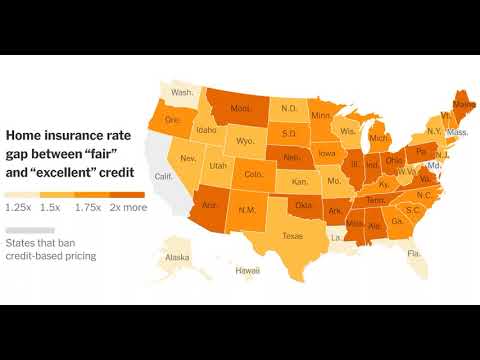
Rising home insurance costs are increasingly tied to credit scores, with homeowners in some states facing significant premiums based on their financial history. This trend raises questions about fairness and accessibility, as good credit is now a key factor in determining insurance affordability.
The Credit Score Penalty
A recent analysis of home insurance rates across the US reveals that credit scores significantly impact premiums. Homeowners with poor credit can expect to pay substantially more for coverage than those with excellent credit. The gap varies by state, with some areas showing dramatic differences in pricing.
For example, a home insurance policy with $400,000 dwelling coverage and $100,000 liability, for a homeowner age 50 or younger, can vary based on credit. While the exact penalty differs by company and state, the correlation is clear: lower credit equals higher premiums.
Data & Methodology
The rates were sourced from Quadrant Information Services, an insurance data firm, using publicly filed information. These are not bindable quotes but representative samples from a majority of insurers in each state. The analysis averaged rates at the state level from zip code data to provide a broader picture.
It’s important to note that insurance companies use proprietary methods for integrating credit history, so scores don’t directly align with standard FICO credit scores. This opacity makes it difficult for consumers to fully understand how their credit affects insurance pricing.
Why This Matters
The rising reliance on credit scores for insurance rates disproportionately affects lower-income individuals and communities of color, who historically face systemic barriers to building good credit. This practice effectively creates a financial penalty for those already struggling, further exacerbating economic inequalities.
The trend also highlights a broader shift in the insurance industry, where risk assessment is increasingly driven by non-traditional data points like credit history. This raises concerns about transparency and fairness, as consumers may not be aware of how their financial profiles are being used to determine insurance eligibility and costs.
In conclusion, the link between home insurance premiums and credit scores is growing stronger, creating a financial burden for many homeowners. The practice demands scrutiny, as it risks reinforcing existing economic disparities and reducing access to essential coverage.