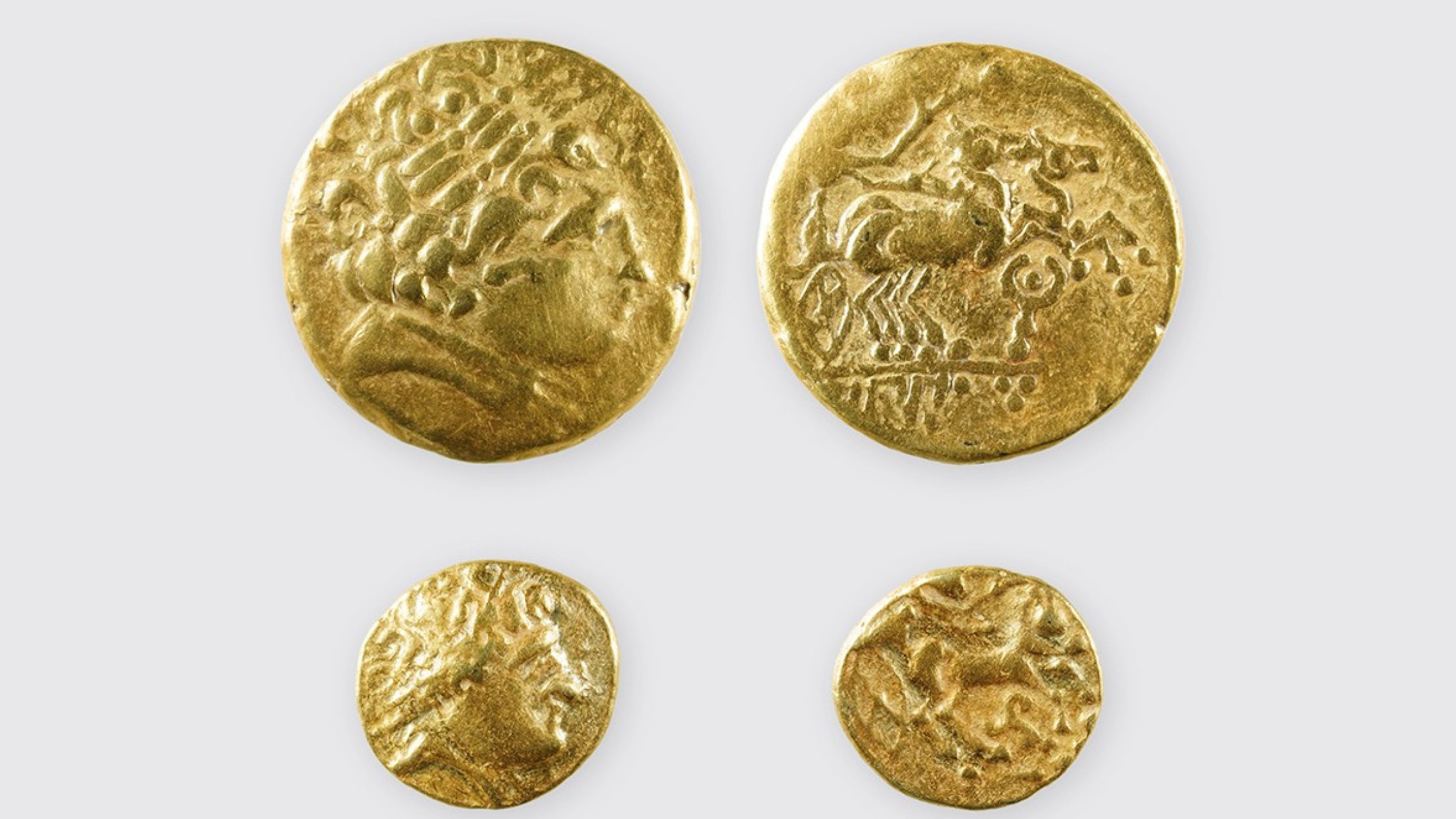
Two remarkably well-preserved Celtic gold coins, dating back approximately 2,300 years, have been discovered in a bog near Arisdorf, Switzerland. The find is significant as these coins rank among the oldest Celtic coinage ever found in the country, offering fresh insight into early Celtic economies and religious practices.
Historical Context: Celtic Coinage and Greek Influence
The coins—a stater weighing 7.8 grams and a quarter-stater weighing 1.86 grams—are direct imitations of Greek staters minted during the reign of Philip II of Macedon, father of Alexander the Great. This imitation highlights the early Celtic exposure to, and adoption of, Greek monetary systems. During the late fourth century B.C., Celtic mercenaries in mainland Europe were often paid in Greek coins, which then became the basis for their own coinage starting in the third century B.C.
The obverse of both coins features the profile of Apollo, the Greek god, while the reverse depicts a two-horse chariot. Notably, the smaller coin bears a unique Celtic modification: a triskele—a triple spiral symbol—beneath the chariot. This design element demonstrates an early integration of indigenous artistic motifs into adopted monetary forms.
The Discovery and Follow-Up Investigations
The discovery occurred after previous excavations between 2022 and 2023 yielded 34 silver Celtic coins in the same bog, the Bärenfels. In spring 2025, volunteer archaeologists Wolfgang Niederberger and Daniel Mona revisited the site, leading to the unearthing of these two gold pieces. The bog’s unique geological composition—water-filled sinkholes creating a wetland environment—likely played a role in preserving the coins over millennia.
Religious Significance: Offerings to Ancient Gods?
Experts believe these coins were not intended for daily use, given their value. They were likely used for high-value transactions like diplomatic gifts, political payments, or even dowries. However, the coins’ location suggests a deeper purpose : Celtic sacred sites often included bogs and wetlands, considered holy ground dedicated to their deities.
Archaeologists theorize the coins were deliberately deposited as offerings, a common practice in Celtic religious rituals. The Bärenfels bog would have been viewed as a liminal space connecting the mortal realm to the divine, making it a fitting place to honor the gods. This discovery supports the broader understanding that early Celtic economies were intertwined with ritualistic and symbolic exchange, rather than purely commercial function.
Both gold coins will be displayed alongside the previously found silver coins in Basel starting in March 2026, offering the public a rare glimpse into the monetary and religious world of ancient Celts.