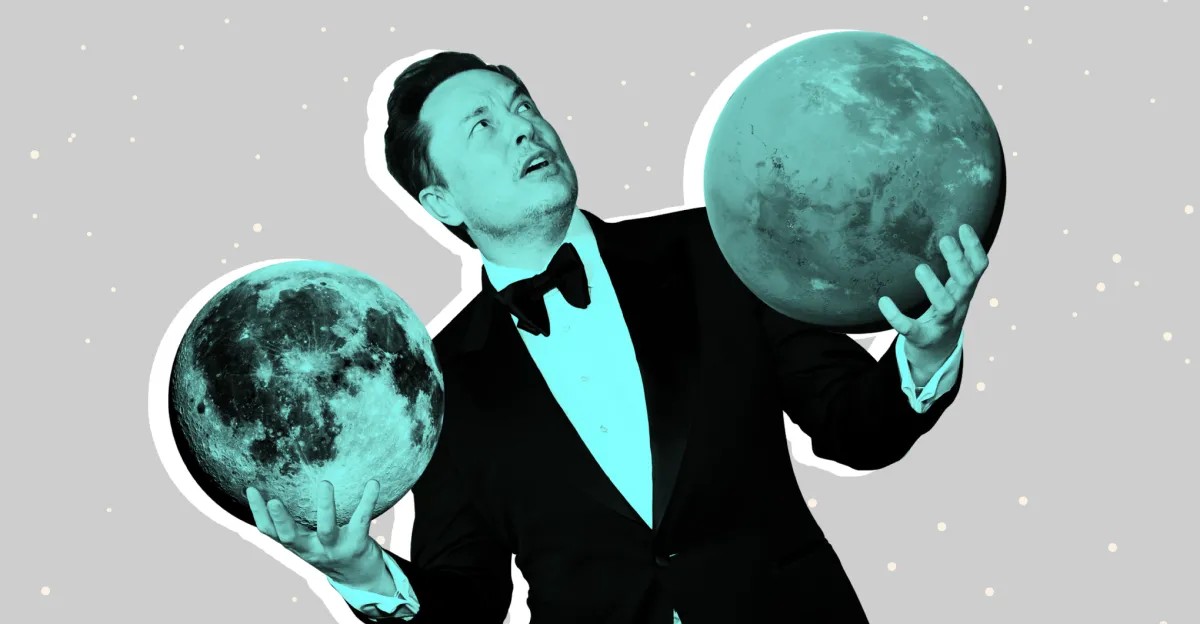
Elon Musk is pushing SpaceX toward an initial public offering (IPO) despite years of publicly stating he didn’t want the company to go public until his Mars transport system was operational. This move raises serious questions about SpaceX’s financial health, its long-term strategy, and the influence of Musk’s other ventures, particularly the chaotic xAI (formerly Twitter).
The Shift in Strategy: From Mars to Markets
Musk has historically opposed taking SpaceX public, citing the short-term pressures of quarterly earnings and the potential for market volatility. In a 2013 email to SpaceX staff, he wrote, “I am hesitant to foist being public on SpaceX, especially given the long term nature of our mission.” Tesla went public only because it had “no choice.” Now, SpaceX seems to be reversing course, seemingly driven by financial necessity rather than strategic timing.
The timing is suspect. Musk needs to prop up investors in his debt-loaded Twitter takeover, which was notoriously overvalued even before it closed and became the worst merger for its banks since the financial crisis. Smushing X into xAI gave those investors a slice of the more valuable company as a thank-you for their trouble. And, in turn, rolling the money-losing xAI into SpaceX gives them an even bigger return on their investment, with the IPO poised to give them an opportunity to sell, realize their profits, and put the whole thing behind them.
The Role of xAI: A Poison Pill or a Strategic Play?
The inclusion of xAI, Musk’s notoriously unprofitable social media platform (formerly Twitter), in the SpaceX IPO is particularly alarming. xAI burned through almost $10 billion in cash in the first nine months of last year to achieve just $210 million in revenue. Adding this liability to SpaceX suggests Musk may be using xAI as a deterrent against activist investors, who might otherwise seek to overhaul the company’s leadership.
Financial Pressures and Starlink’s Uncertain Future
SpaceX’s primary moneymaker, Starlink, is also under scrutiny. While Starlink has expanded rapidly into consumer, military (particularly in Ukraine), and commercial markets, its profitability remains questionable. The company slashed prices, potentially eroding margins, just as new competitors like Amazon (with its Leo satellite service) enter the space. Musk’s unpredictable behavior could further undermine SpaceX’s competitive advantage.
Despite Starlink’s impressive scale (9.2 million subscribers in 2023), revenue only reached $16 billion last year, falling short of the projected $19 billion based on 6 million subscribers. Reports suggest that “money-making quarters have been less consistent than Musk suggested to investors.”
Starship: The Next Choke Point
The future of SpaceX hinges on the success of Starship, its next-generation launch vehicle. But Starship development has been plagued by delays and explosions, leaving key satellite deployments stalled. SpaceX estimates Starship will be ready to launch a new constellation of Starlink satellites by mid-2027, but this timeline is contingent on overcoming significant technical hurdles. If Starship doesn’t deliver on its promises, SpaceX’s launch costs will remain high, and its long-term prospects will dim.
The IPO: A Desperate Move or a Calculated Risk?
SpaceX is targeting a $1 trillion valuation for its IPO, which would qualify it for accelerated inclusion in financial indexes like the Nasdaq. This maneuver would allow Musk to offload shares onto retail investors and index funds, potentially boosting the stock price while avoiding scrutiny.
Whether this IPO will succeed is uncertain. SpaceX’s financial projections have been historically optimistic, and Musk has a track record of overpromising and underdelivering. Investors should approach this offering with extreme caution, given the company’s questionable financials, the inclusion of a money-losing subsidiary, and the unpredictable nature of its CEO.
Conclusion: The SpaceX IPO appears driven by financial necessity rather than strategic ambition. Musk is likely seeking to prop up his other ventures, particularly xAI, while cashing out for investors and exploiting index fund inclusion. The risks are significant, and investors should proceed with skepticism.