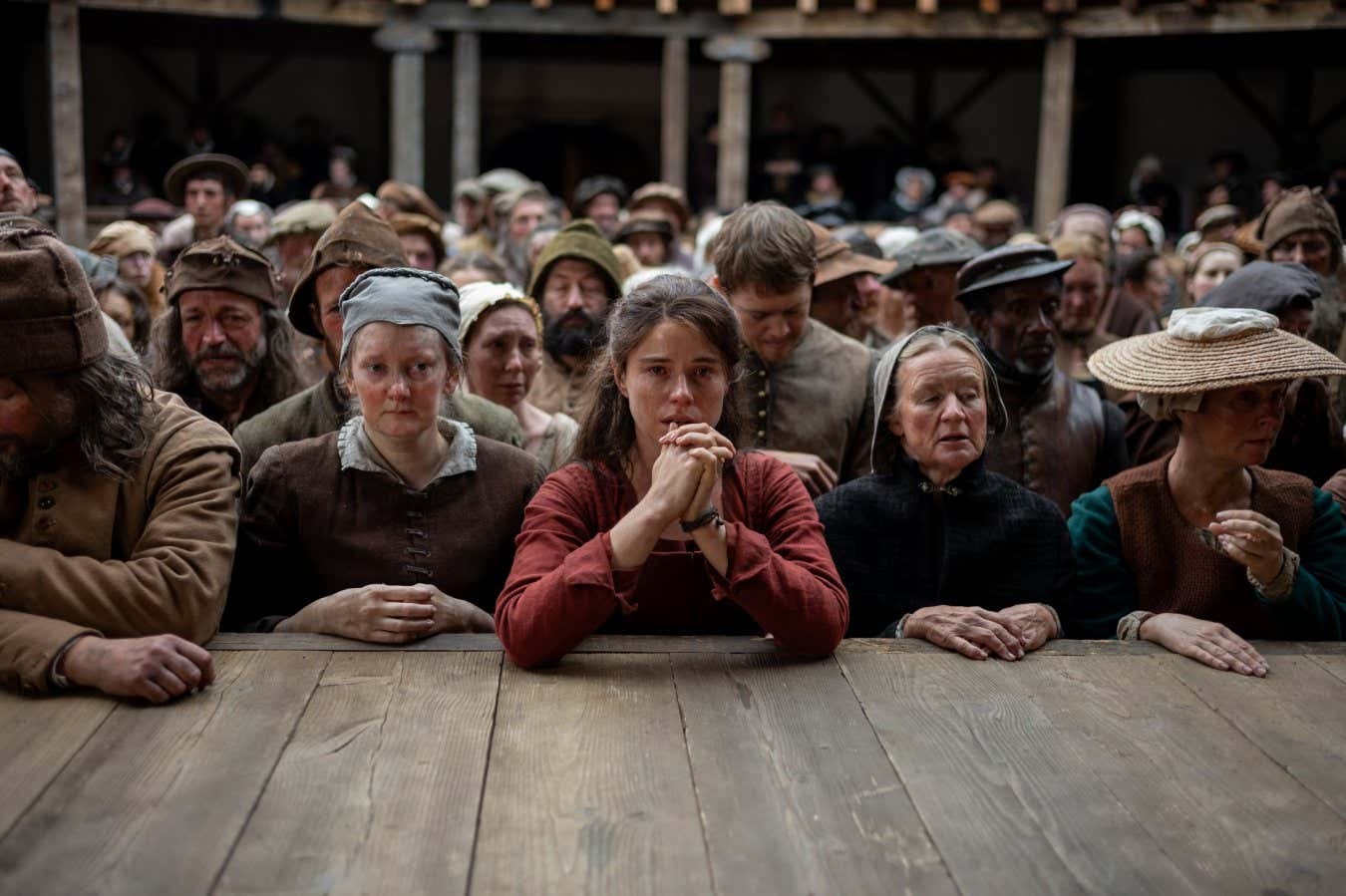
The new film Hamnet, adapted from Maggie O’Farrell’s acclaimed novel, powerfully illustrates a connection between humanity and the natural world that resonates deeply with the work of William Shakespeare himself. While the film presents a visceral portrayal through Agnes, the mother of Shakespeare’s son Hamnet, who is depicted as deeply intertwined with the woods and herbal remedies, this is not a new concept. Shakespeare was acutely aware of humans as part of an inescapable natural cycle, not separate from it.
The Brutal Logic of Hamlet
Consider the infamous gravedigger scene in Hamlet. The prince’s chilling response to the king’s inquiry about Polonius—”Not where he eats, but where he is eaten”—underscores a ruthless biological truth. Shakespeare doesn’t shy away from the food chain; in fact, he highlights it with stark clarity: we consume other creatures to sustain ourselves, only to become sustenance for others in turn.
This isn’t mere morbid fascination. It’s a fundamental recognition of mortality and the interconnectedness of all life. As Shakespeare puts it, even a king’s corpse can feed worms, which in turn feed fish, which may then be eaten by humans. The implication is inescapable: we are all part of this cycle, predator and prey.
Hamnet as Echo
The author Rowan Hooper notes that O’Farrell and director Chloe Zhao appear to be recycling the essence of the dead boy into the fictional Hamlet. This is not an accident: Shakespeare’s work constantly circles back to this inescapable truth. Hamnet isn’t just a tragedy; it’s a brutal reminder that even in grief, we remain bound by the same laws governing every other creature on Earth.
The film, and Shakespeare’s work more broadly, forces us to confront our place in the natural order. It’s a disquieting but necessary recognition that human exceptionalism is an illusion. We are not above the cycle, merely another link in the chain.
In a world increasingly disconnected from the natural world, both Hamnet and Shakespeare’s plays offer a stark lesson: we ignore this fundamental truth at our peril.