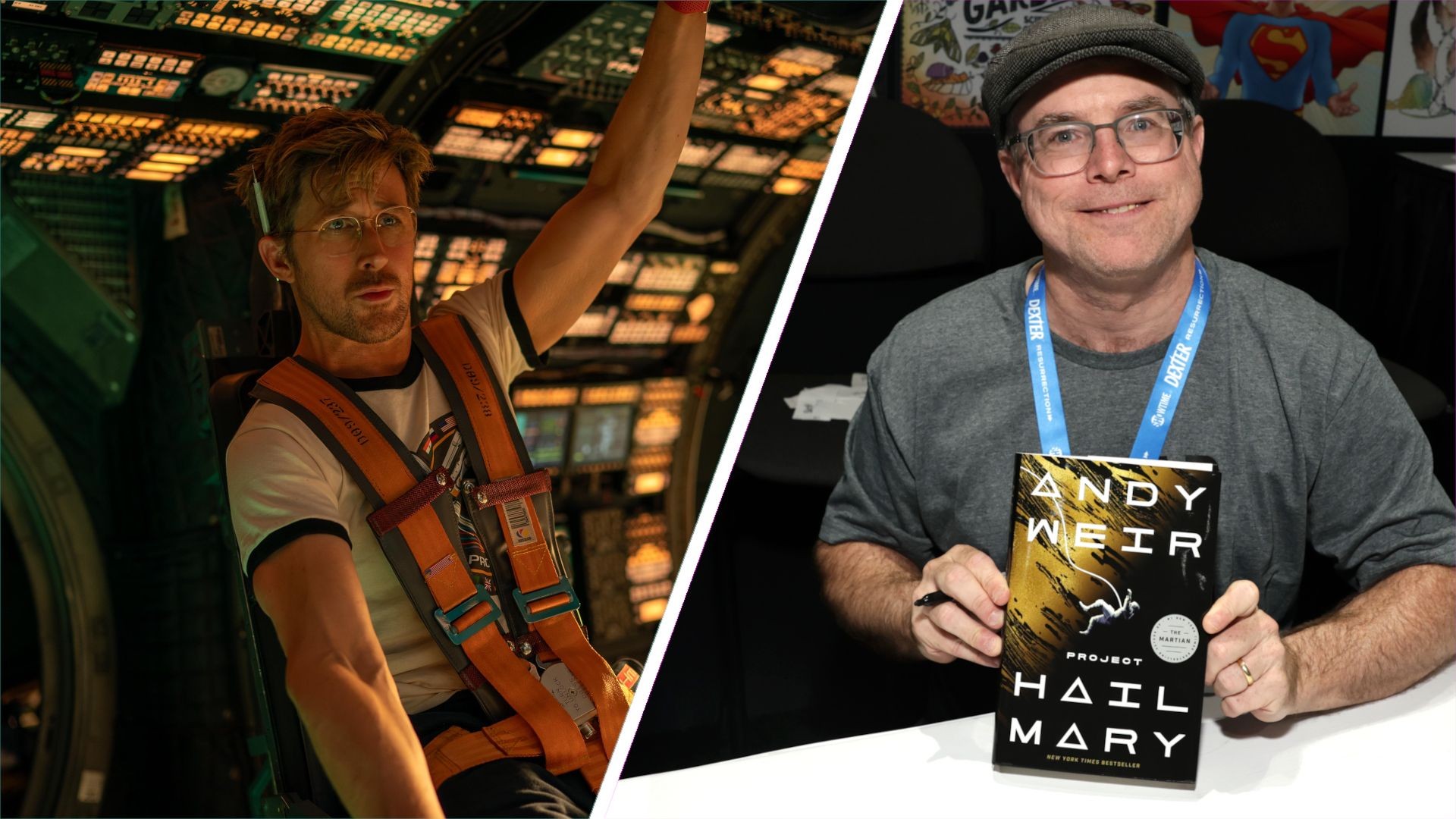
Andy Weir, author of “Project Hail Mary,” blends cutting-edge astrobiology with gripping storytelling in his latest work. The film adaptation, like the book, dives deep into speculative biology, exploring alien life in ways that resonate with real scientific theories. Weir’s approach isn’t just about inventing fantastical creatures; it’s about extrapolating from what we know about life on Earth to imagine possibilities beyond our planet.
The Astrophage Threat: A Cosmic Mold
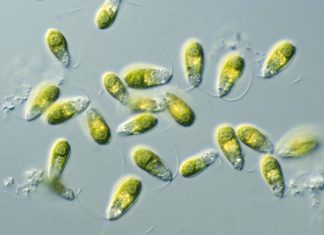
The central premise of “Project Hail Mary” revolves around astrophage, a star-eating microbe that threatens humanity’s sun. Weir describes it as “basically just mold that lives on stars,” a chillingly simple concept with devastating consequences. This fictional threat isn’t entirely divorced from reality; scientists actively search for “biosignatures”—indicators of life—on other planets, often focusing on familiar elements like water, methane, or phosphine. However, the film smartly points out that life elsewhere might operate by entirely different rules, making detection far more challenging.
Panspermia: A Plausible Origin Story
To ground his alien biology, Weir employs the panspermia hypothesis: the idea that life isn’t born in isolation but spreads across the cosmos. In the story, astrophage originated around the star Tau Ceti, 11.9 light-years away. This isn’t arbitrary; Tau Ceti is an ancient star, roughly twice the age of our sun, giving any life there a significant evolutionary head start. Astronomers have already confirmed multiple rocky planets orbiting Tau Ceti, including two potentially habitable worlds. This deliberate choice highlights the real possibility that life didn’t emerge here first.
Extremophile Biology: Life Beyond Comfort Zones
“Project Hail Mary” doesn’t just imagine alien life; it builds on the known limits of terrestrial biology. Astrophage’s ability to metabolize thermal energy is extreme, but not impossible. On Earth, extremophiles thrive in boiling hot springs and withstand radiation levels lethal to most organisms. The film also features taumeoba, a microbe found in the upper atmosphere of Adrian, mirroring real-world bacteria and fungi that live high in Earth’s troposphere.
Rocky’s World: Life Without Water?
Perhaps the most provocative element is Rocky, an intelligent alien from a planet lacking liquid water. This challenges a long-held assumption that water is essential for life. Recent studies suggest that life could evolve under alternative conditions, though it would be unrecognizable by human standards. Weir’s inclusion of Rocky forces us to confront the idea that the universe might harbor life forms far stranger than we currently imagine.
The Future of Astrobiology
“Project Hail Mary” isn’t just entertainment; it’s a thought experiment in evolution. By pushing the boundaries of what’s scientifically plausible, Weir’s work encourages real-world astrobiologists to expand their horizons. Whether we find life beyond Earth remains unknown, but the film reminds us that the possibilities are as vast as the cosmos itself.
The film’s success lies in its ability to blend scientific rigor with captivating storytelling, making complex ideas accessible while maintaining a sense of wonder.