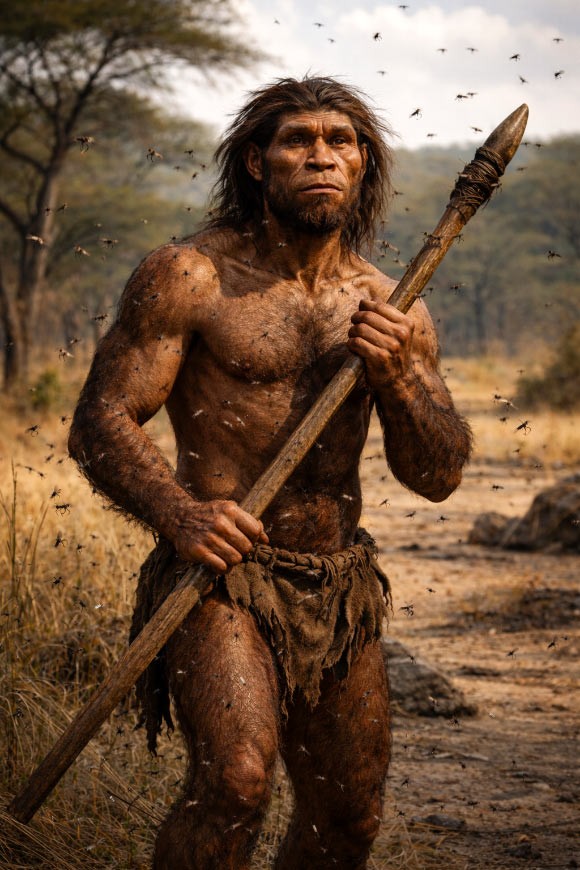
The ancestors of malaria-carrying mosquitoes in Southeast Asia likely began targeting humans around 1.8 million years ago, coinciding with the arrival of Homo erectus in the region. This is the key finding of new genetic research published in Scientific Reports, suggesting that the evolution of mosquito preference for human blood is much older than previously thought.
The Evolutionary Leap to Human Blood
Mosquitoes typically don’t specialize in human feeding, but this preference is crucial because it directly impacts their ability to spread diseases. Researchers analyzed the DNA of 38 mosquitoes from 11 species within the Anopheles leucosphyrus group, collected over decades from Southeast Asia. By reconstructing the evolutionary history of these mosquitoes, the team found that the shift to human feeding likely occurred only once, between 2.9 and 1.6 million years ago in a region called Sundaland (modern-day Malay Peninsula, Borneo, Sumatra, and Java).
Before this, these mosquitoes fed on primates. The timing of this shift aligns with the earliest estimated arrival of Homo erectus in the region. This is significant because it predates the evolution of human-feeding preferences in African malaria mosquitoes (Anopheles gambiae and Anopheles coluzzii ) by over a million years.
Why This Matters
The study suggests that Homo erectus wasn’t just present in Southeast Asia 1.8 million years ago—they were abundant enough to drive the evolution of a new mosquito feeding preference. This is important because understanding how and why mosquitoes adapted to feed on humans can help scientists better predict and prevent future outbreaks of mosquito-borne diseases.
Changes in mosquito feeding habits require genetic adaptations to detect human body odor, meaning Homo erectus had to be a dominant presence in the region for this adaptation to occur. The fossil record in Southeast Asia is sparse, making genetic evidence like this particularly valuable in piecing together the history of early hominin colonization.
The Bigger Picture
The findings underscore a fundamental truth about disease vectors: they adapt to their hosts. This study isn’t just about mosquitoes; it’s about how early humans reshaped the ecosystems around them, even at a microscopic level.
This research supports the idea that early hominins were present in substantial numbers in Sundaland 1.8 million years ago, driving the evolution of mosquitoes that ultimately became key disease carriers.
The team’s work adds another piece to the puzzle of early human migration and adaptation, highlighting the long-term consequences of species interactions.