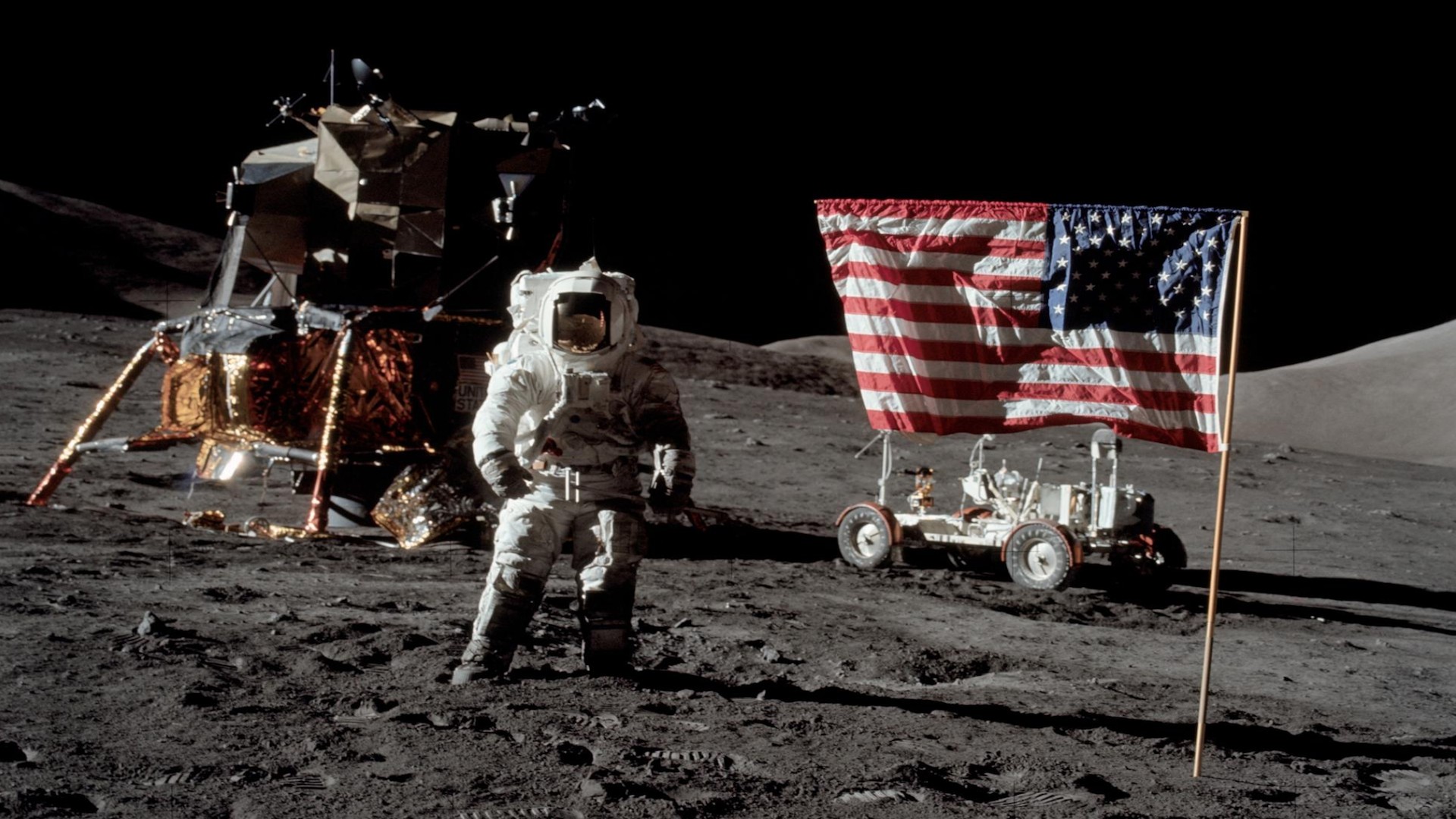
For the first time since 1972, astronauts are once again traveling to the moon, marking a new chapter in space exploration with NASA’s Artemis 2 mission. But the decades-long gap raises a crucial question: why did it take so long for humanity to return? The answer lies not just in technological hurdles, but in the shifting geopolitical landscape and changing priorities.
The Cold War Catalyst
The original push to the moon under the Apollo program was a direct product of the Cold War. The United States and the Soviet Union engaged in a fierce space race, driven by national security concerns. The launch of Sputnik 1 in 1957, the first artificial satellite, shocked the U.S., shattering the belief in American technological superiority. This fear escalated with the Soviet Union’s further achievements – including sending Laika, the first animal to orbit Earth, though she did not survive – and a disastrous U.S. satellite launch failure broadcast live on television.
As Ed Stewart, curator at the U.S. Space & Rocket Center, explains, “savvy people understood that if they could put a satellite into orbit, that meant they could drop a weapon pretty much wherever they wanted.” The race to space quickly became a proxy for demonstrating military and ideological dominance. The Soviets initially led, launching the first human into space, Yuri Gagarin, in 1961. But the U.S. responded by setting the ultimate goal: landing a man on the moon.
This ambition was amplified by the decolonization wave sweeping the globe in the 1950s and 60s, as newly independent nations sought alignment with either the U.S. or the Soviet Union. Space achievements became a powerful tool for soft power, as Roger Launius, former NASA Chief Historian, noted: “Apollo was a demonstration of soft power… that was the reality of it.” During Apollo’s peak, NASA consumed 4.4% of the entire federal budget, reflecting the immense strategic importance placed on winning this race.
The End of an Era
With the U.S. victory in the moon race – Neil Armstrong and Buzz Aldrin’s historic landing in 1969 – momentum waned. As Stewart observes, many questioned the need to continue: “We did what JFK wanted us to do. We beat the Soviets. We’re still the technological powerhouse of the world. Why do we need to go back?” President Nixon’s shift towards prioritizing the Space Shuttle program further curtailed funding for continued lunar missions.
The collapse of the Soviet Union in the early 1990s eliminated the existential geopolitical pressure that had fueled the original space race. Without a clear rival, the urgency to invest heavily in lunar exploration evaporated. The political will simply wasn’t there.
A New Race Emerges
Today, a new competitor has risen: China. Beijing has set ambitious space goals, including landing astronauts on the moon by 2030. This renewed competition has reignited calls for a U.S. return to the moon, though the dynamics are fundamentally different. As Launius points out, “There is no comparison whatsoever.”
The Cold War was defined by a mutual threat of nuclear annihilation. The current rivalry with China lacks that same level of existential urgency. While the competition is real, it does not carry the same weight of global survival.
Artemis and the Future
The Artemis program differs from Apollo in its long-term goals. It isn’t just about planting a flag; it’s about establishing a sustainable presence on the moon, building infrastructure and gaining the knowledge needed for eventual missions to Mars. Frederic Bertley, president of the Center of Science and Industry, emphasizes that “motivation and catalysis are critical.” The Apollo program proved that humanity is capable of extraordinary achievements when driven by clear, urgent objectives.
The Artemis program represents a recognition that geopolitical pressure alone may not be enough to drive space exploration. The pursuit of knowledge, economic opportunity, and the long-term survival of our species will be the new catalysts for humanity’s next giant leap.
The return to the moon is not merely a symbolic gesture; it’s a step towards a future where space exploration is driven by ambition, sustainability, and the pursuit of knowledge, rather than solely by rivalry.