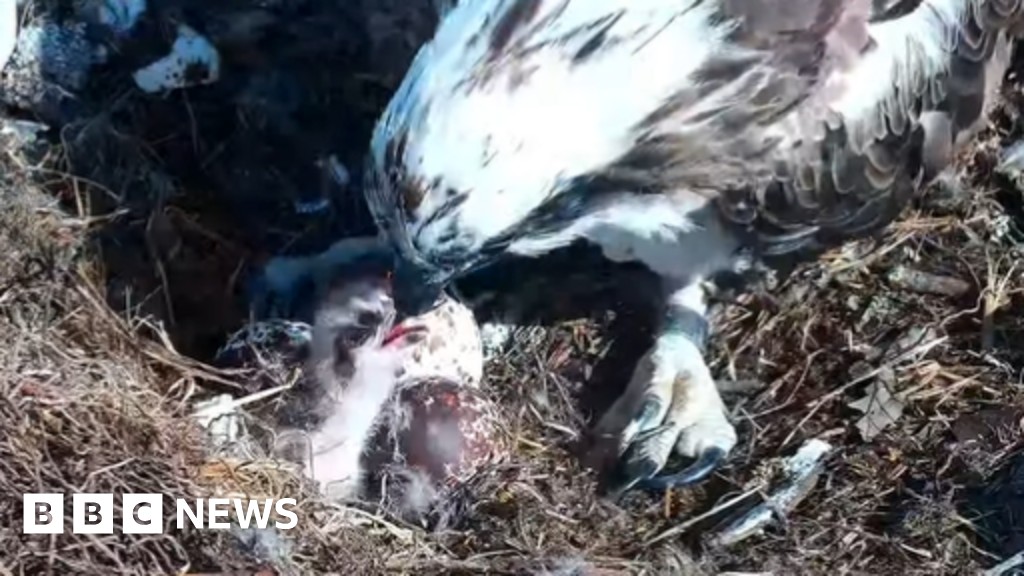
It arrived at 15:10. Friday afternoon. A tiny head breaks through shell and life begins again for the region’s lone breeding pair.
The chick belongs to CJ7 and her partner 022. They nested in a walled garden. It overlooks Poole Harbour. This is their third year in a row at this specific site in Dorset. Four eggs were laid. All laid in April. Conservationists are already calling it a good sign.
“Great start to what will hopefully be another successful year”
That’s how Birds of Poole Harbour put it. They lead the reintroduction effort. But this wasn’t always a simple reunion.
Last year was messy. CJ7 arrived on March 25 only to find 022 already there. The catch? Another female was there too. Nest sharing is a complication. This year they arrived just days apart. 022 joined on the 26th. No rivals. Just them.
Laying four eggs again is rare for ospreys. The charity admits as much. Usually you don’t see that consistency. It’s excellent news for a population trying to stick on the south coast. The numbers add up: three chicks in 2023. Four in 2024. Four more last year in 2025 now they’ve started again.
How did they get here? It took patience. A program began in 2017. Birds of Poole Harbour joined forces with the Roy Dennis Wildlife Foundation. They moved up to fourteen chicks from Scotland every year. They released them until 2021 ended. It was a brute-force attempt at repopulation.
And it stuck. This pair are the first to breed on England’s south coast in a century and eighty years. The gap was long. Eighteen decades without this sight.
Now the cycle repeats. Will all four survive? Time usually tells.