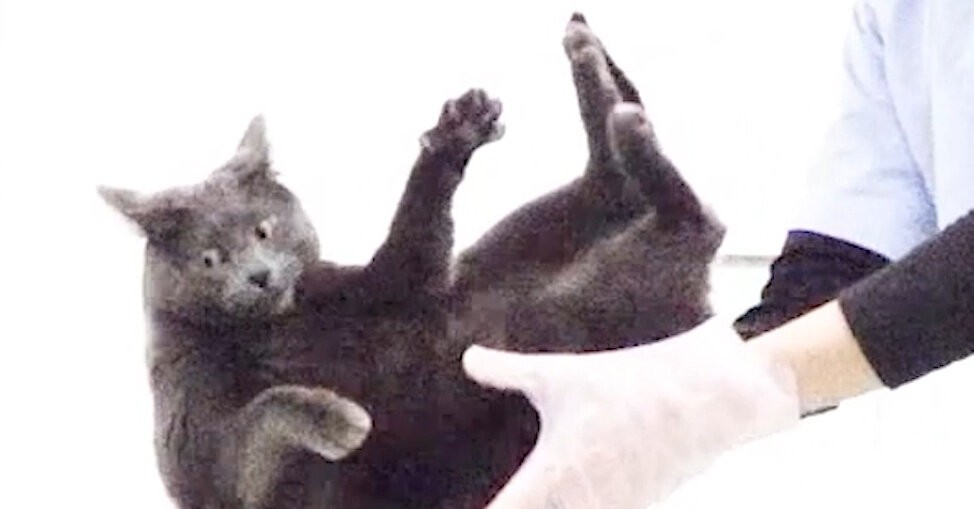
For over a century, scientists have been fascinated by the seemingly effortless ability of cats to right themselves mid-air and land on their feet. The question isn’t just about curiosity; understanding this phenomenon reveals fundamental principles of physics and biomechanics. The key lies in the unique flexibility of a cat’s spine, allowing for a complex series of rotations that defy simple explanations.
The Historical Puzzle
The first systematic study of this “falling cat problem” dates back to 1894, when French physiologist Étienne-Jules Marey used early motion photography to prove that cats do reliably orient themselves during a fall without external assistance. Despite this initial observation, the exact mechanism remained elusive, sparking decades of research.
New Anatomical Insights
Recent findings, published in The Anatomical Record, suggest that the extraordinary flexibility of the feline spine is central to this ability. Researchers propose that cats can adjust their bodies in mid-air due to the structure of their vertebrae, enabling rapid rotational adjustments.
Greg Gbur, a physicist specializing in cat falls at UNC Charlotte, notes this study is the first to explicitly link spinal structure to the cat’s acrobatic maneuver. The spine’s flexibility isn’t just about bending; it’s about controlled twisting and reorientation.
Why It’s Hard to Model
The challenge in fully understanding the phenomenon comes down to the animal’s complexity. Physicists have attempted to create simplified equations to model the falling cat, but the real cat, as zoologist Ruslan Belyaev puts it, is far from simple. The anatomy of cats has not been fully studied in detail, which makes it hard to predict how they behave in freefall.
The puzzle remains not just because of physics but also because of biology. Cats have evolved this ability, presumably for survival, but the precise combination of anatomical features that enable it is still being unraveled.
The cat’s ability to land on its feet is a remarkable example of how evolution optimizes physical systems. Further research into feline anatomy and biomechanics will likely continue to refine our understanding of this enduring scientific curiosity.