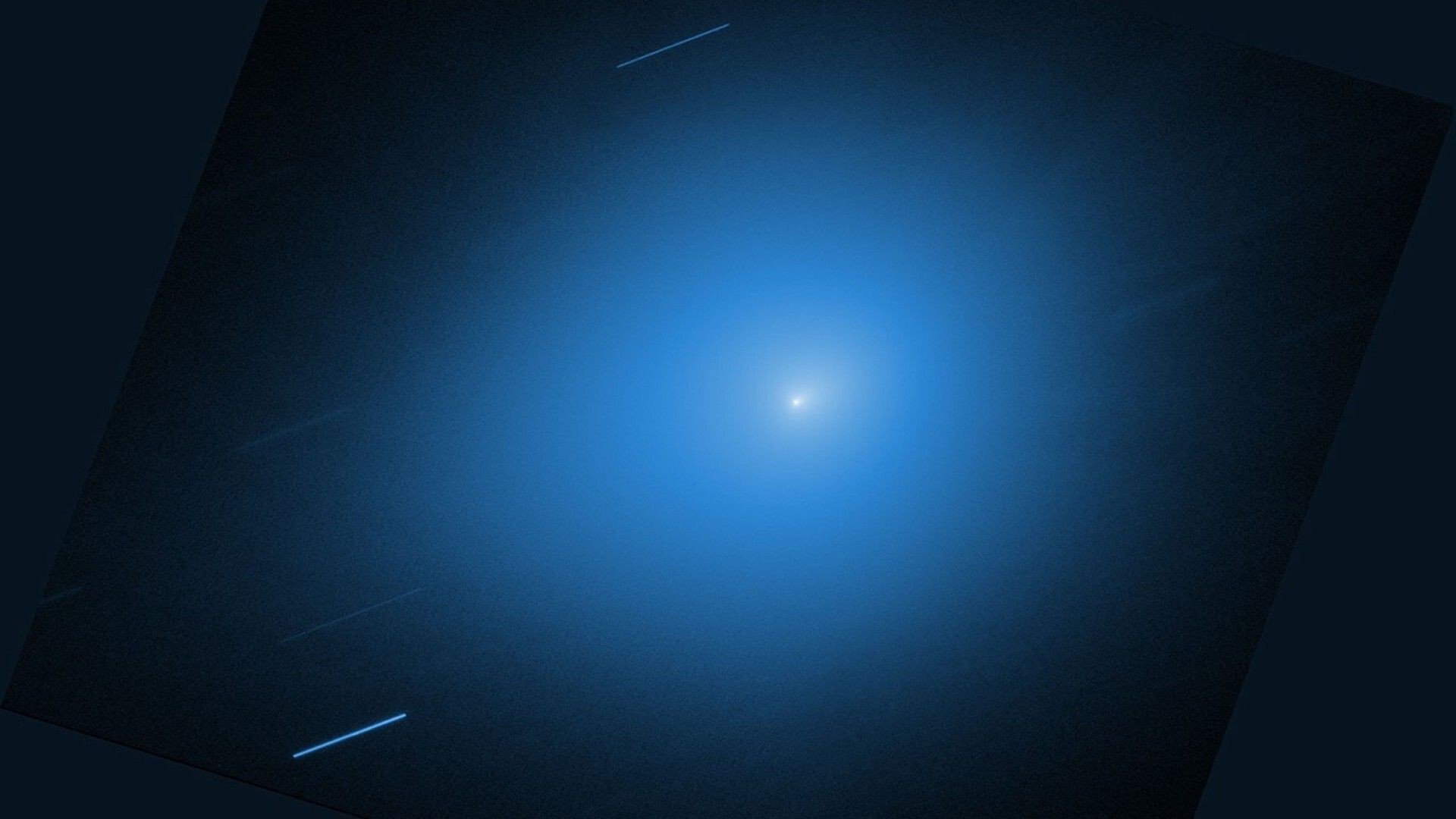
An interstellar comet, designated 3I/ATLAS, is estimated to be between 10 and 12 billion years old – making it one of the oldest objects observed in our solar system, and potentially originating from a star system that no longer exists. Discovered in 2025, the comet’s extreme velocity (36 miles per second) and unique isotopic composition have led astronomers to believe it formed shortly after the Milky Way itself.
The Comet’s Extreme Age
The age assessment comes from analyzing the ratio of carbon-12 to carbon-13 within the comet, as well as the concentration of deuterium in its water ice. The findings, obtained using the James Webb Space Telescope’s NIRSpec instrument, suggest 3I/ATLAS predates the period when carbon-13 became abundant in the galaxy. This means the comet formed before the Milky Way experienced a surge of nova explosions – events that would have enriched carbon-13 levels in interstellar space.
Why this matters: The early universe had a different chemical makeup. By studying ancient objects like 3I/ATLAS, we gain insight into the conditions under which the first planetary systems formed. This is crucial because understanding the early stages of planetary development helps us better assess the potential for life elsewhere in the galaxy.
Insights from Isotopic Composition
The ratio of carbon-12 to carbon-13 provides a timeline. Carbon-13 accumulates over time, so a low ratio indicates an ancient origin. Similarly, high levels of deuterium in water ice suggest formation in cold, metal-poor interstellar clouds typical of the early universe.
“We believe that cometary materials in general are representative of the building blocks of planets outside the water snow-line in the protoplanetary disk,” says NASA Goddard scientist Martin Cordiner. “So the same is probably true of interstellar comets, and they provide unique insights into what extrasolar planets could be formed from.”
A Relic from a Lost System?
Given its age, the star system that birthed 3I/ATLAS may have ceased to exist. The Milky Way’s disk structure offers clues: the comet likely originated in the thicker, older part of the galaxy, where stars formed earlier. Tracing its exact origin is impossible due to gravitational interactions over billions of years, but the findings suggest it came from a planetary system that existed in the galaxy’s earliest stages.
The comet’s composition – rich in carbon and water – indicates the presence of complex chemistry even in the early universe, implying organic molecules and water were key ingredients in planet formation from the start.
In conclusion: 3I/ATLAS is not just an interstellar visitor; it’s a relic of a bygone era, offering a rare glimpse into the conditions of the early Milky Way and the potential building blocks of lost planetary systems. Its existence underscores the dynamic history of our galaxy and the possibility that many star systems have risen and fallen over cosmic time.