A single, grain-sized fragment of rock has provided a window into a lost world, revealing that the oceans were far more biologically diverse before one of Earth’s greatest catastrophes than previously believed.
Researchers have discovered 20 microscopic fossils representing eight different species within a rock pellet no larger than half a grain of rice. This find is not just a win for taxonomy—it includes a species entirely new to science—but it also challenges our understanding of the marine ecosystems that existed just before the Late Ordovician mass extinction.
A Snapshot of a Lost Ecosystem
The sample was recovered from the Sichuan Basin in China and dates back 445 million years. This specific timeframe is critical: the rock formed immediately before the Late Ordovician extinction, the second-largest mass extinction event in Earth’s history.
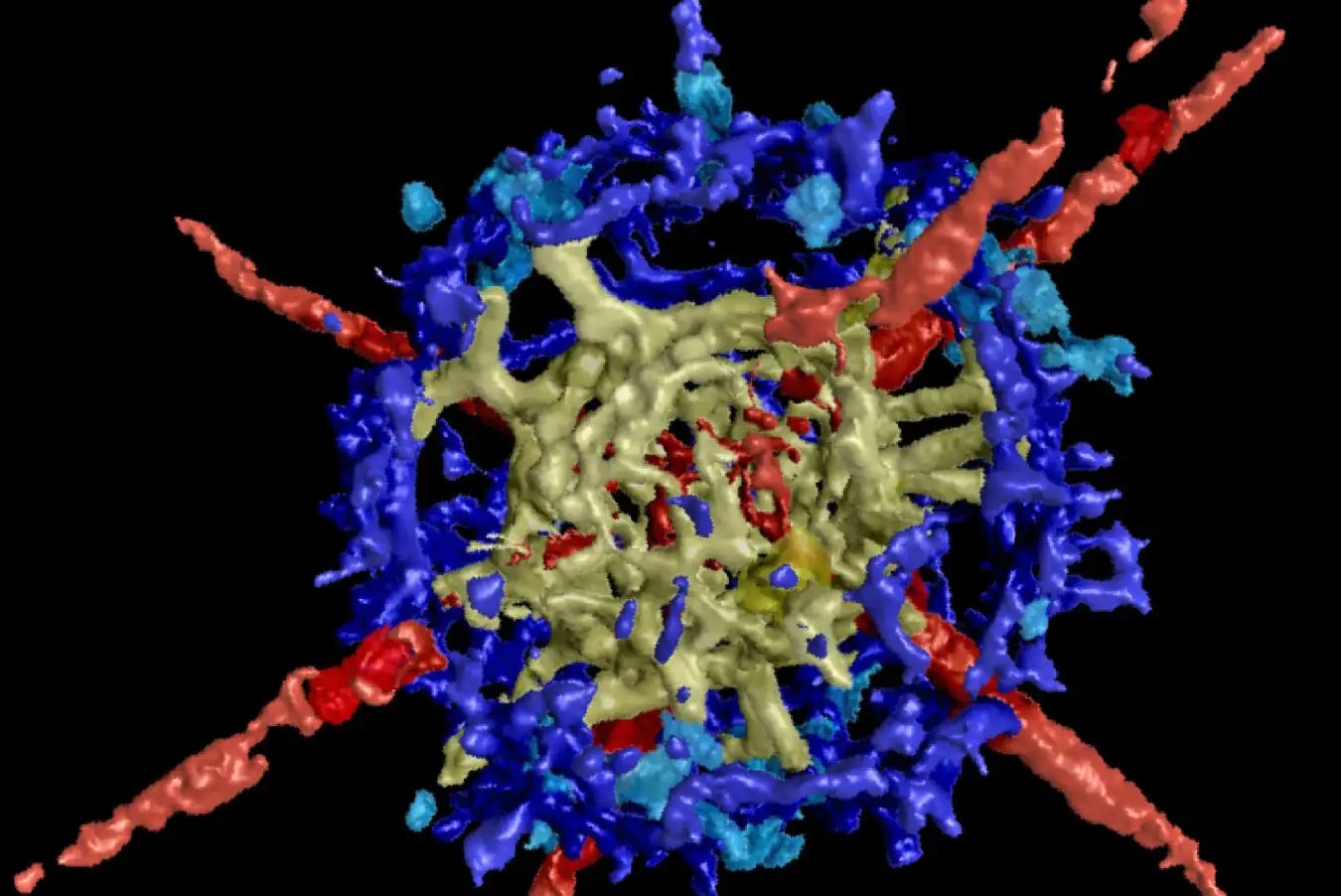
Inside the pellet, scientists identified various species of radiolarians. These are single-celled plankton that construct intricate shells from silica. The fossils were found in near-perfect condition, preserved by bitumen—a naturally occurring, tar-like substance—which filled their internal and external structures to create flawless impressions.
The discovery includes:
– Eight different species of radiolarians.
– Five genera, four families, and three orders of microscopic life.
– A newly identified species named Haplotaeniatum wufengensis .
The Technology Behind the Breakthrough
For decades, studying such tiny fossils required a “destructive” approach: scientists would dissolve the surrounding rock with acid to isolate the specimens. This method often risks damaging the very details researchers seek to study.
To bypass this, the team utilized a Synchrotron —a powerful X-ray machine located at the Australian Nuclear Science and Technology Organisation. This advanced technology allowed the researchers to:
1. Perform high-speed, 3D scans of the rock pellet.
2. “See through” the solid stone without extracting the fossils.
3. Observe the internal and external structures of the plankton in exquisite detail.
Lead researcher Jonathan Aitchison described the capability as a revolutionary leap in the field, noting that the ability to visualize these microscopic worlds without destroying the host rock changes how we approach paleontology.
Why This Matters: Rethinking Extinction
The sheer density of life found in such a minuscule sample suggests that our previous models of the Ordovician period may be incomplete.
“The high number and diversity of fossils show that marine ecosystems… were rich and active shortly before the extinction,” notes Patrick Smith of the Geological Survey of New South Wales. “The Ordovician oceans were far richer biologically than previously recognised.”
This discovery raises a significant scientific question: If such a tiny fragment contains such immense biodiversity, how much more is hidden in the rest of the fossil record?
The findings suggest that the “missing” history of Earth’s biodiversity isn’t necessarily because the fossils aren’t there, but because our traditional tools were simply too blunt to find them. As imaging technology advances, we may find that the periods leading up to mass extinctions were much more vibrant and complex than we ever imagined.
Conclusion: By using advanced X-ray technology to peer into microscopic rock samples, scientists have revealed a much richer marine world existing on the brink of the Late Ordovician extinction, proving that much of Earth’s biological history remains hidden in plain sight.