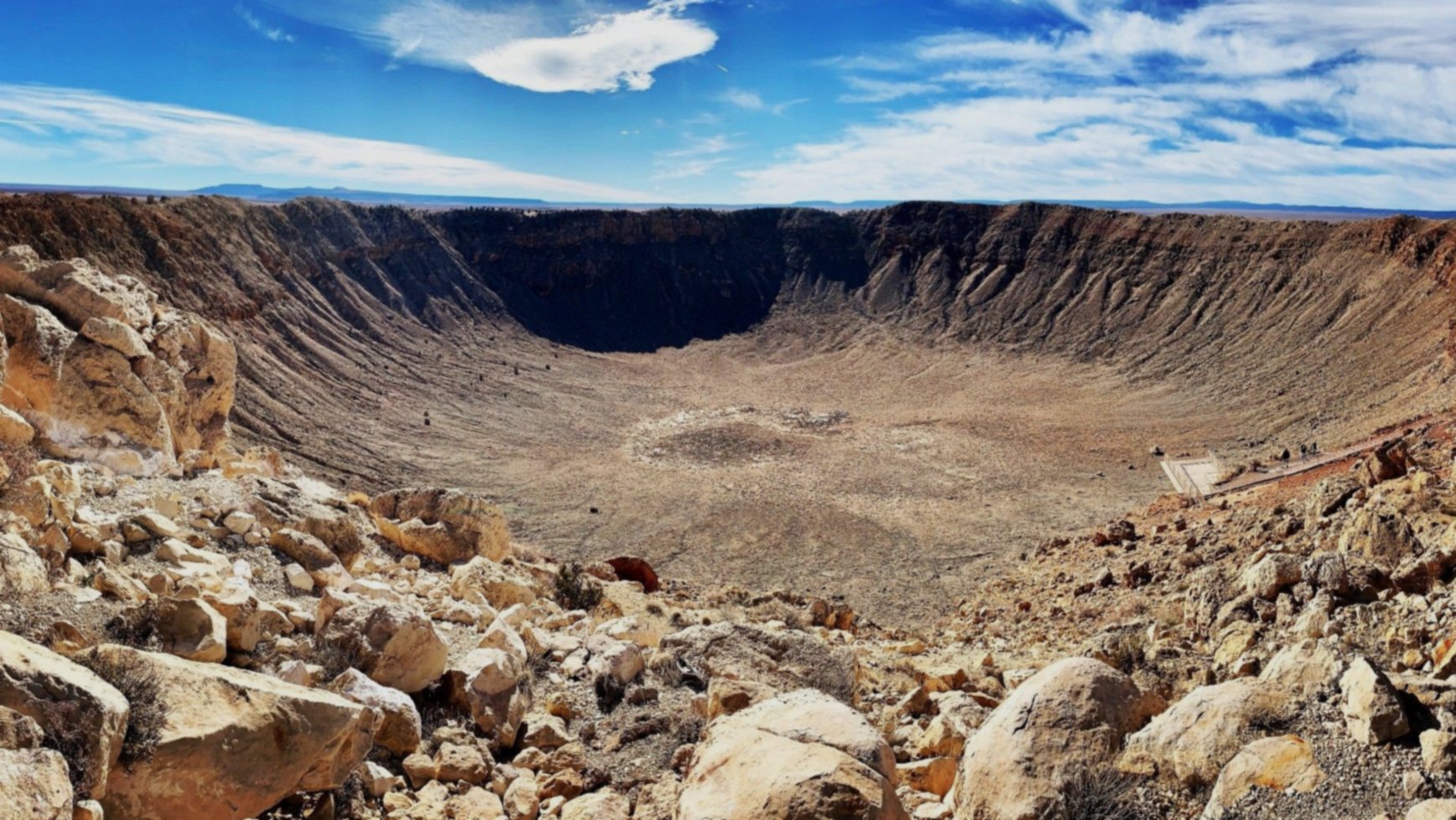
Arizona’s Meteor Crater, formed roughly 50,000 years ago, remains an invaluable site for scientists studying planetary impacts. This remarkably well-preserved crater—over 700 feet deep and 4,000 feet across—offers a unique window into the violent forces that have shaped Earth’s history.
The Crater’s Enduring Value
The crater’s pristine condition makes it ideal for studying the immediate effects of a high-energy collision. As Dan Durda, a research scientist at the Southwest Research Institute (SwRI), explains, “Meteor Crater is the best-preserved and exposed impact crater on Earth… providing new insights every year.” This continuous stream of data is why the Barringer Crater Company (BCC) actively funds research through grants, supporting both laboratory analysis and on-site fieldwork.
Recognizing Impact Origins
Identifying ancient impact craters isn’t simple. Earth’s active geological processes—erosion, tectonic shifts, and atmospheric weathering—quickly obscure or erase evidence of impacts. Christian Koeberl of the University of Vienna emphasizes this challenge, stating that “active geological and atmospheric processes… tend to obscure or erase the impact record.”
Despite this difficulty, around 200 confirmed impact craters have been identified globally. These sites hold clues to catastrophic events that fundamentally altered our planet’s geological and biological evolution.
A Catastrophic History
The most dramatic example is the Cretaceous-Paleogene extinction event, 66 million years ago, triggered by a massive impact that wiped out the dinosaurs. As Koeberl bluntly puts it, dinosaurs “literally had no chance” against such a force.
Modern Research Techniques
Current research relies on detailed morphological and geophysical surveys to uncover hidden or eroded craters. Confirmation requires identifying either shock metamorphic effects in minerals (unique to high-velocity impacts) or traces of meteoritic material within the surrounding rocks.
Impact cratering is not merely a geological event; it’s a short, incredibly energetic process that exceeds even the conditions created by nuclear explosions. This makes these sites critical for understanding not just Earth’s past but also the potential hazards facing our planet today.
Continued investment in impact crater research is crucial, as it represents an interdisciplinary effort with growing importance. The Barringer Crater Company, among others, actively encourages submissions from young researchers worldwide to ensure that the study of these extreme events continues to evolve.