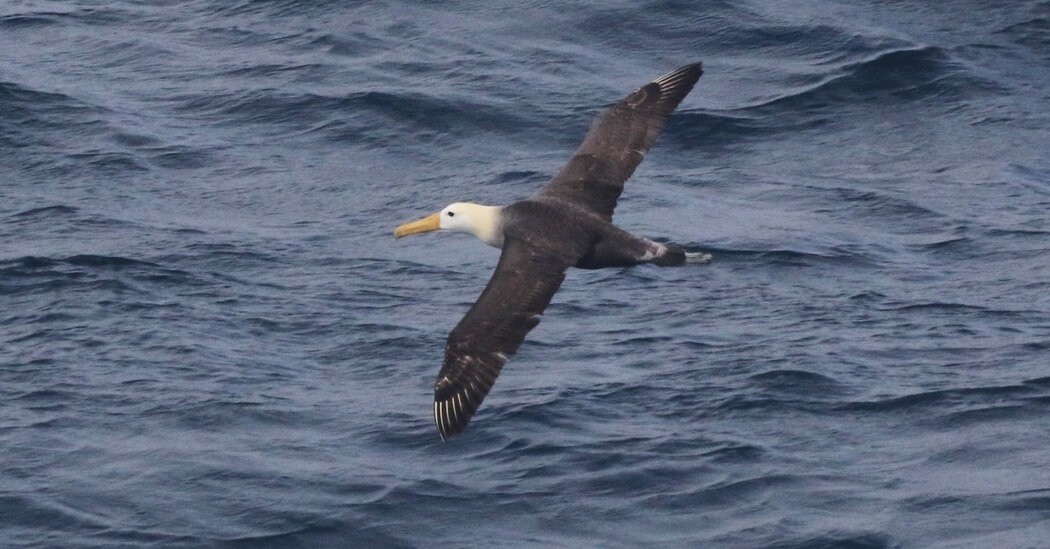
A rare waved albatross – a species typically found off the coasts of South America and the Galápagos Islands – was observed flying near the central California coast on January 23rd. The sighting, made by marine ornithologist Tammy Russell aboard the research vessel Reuben Lasker, is considered highly unusual, as the bird was over 3,300 miles outside its normal habitat.
Unexpected Visitor
Russell, a postdoctoral scholar at the University of California, San Diego, spotted the albatross approximately 23 miles southwest of Piedras Blancas, roughly 90 miles south of Monterey. She described the moment as shocking, noting the bird’s distinct yellow bill and relaxed flight pattern. The sighting was particularly notable given Russell’s extensive experience studying seabird migration patterns.
Why This Matters
Ornithologists categorize such extreme range extensions as “vagrant” events. While not entirely unheard of, these occurrences are rare and can provide valuable insights into species adaptability and the impacts of shifting environmental conditions. The presence of a waved albatross so far north raises questions about possible changes in ocean currents, food availability, or unusual weather patterns that may have driven the bird off course.
Long-Distance Traveler
The albatross’s journey from its usual territory is significant. The species relies on specific oceanic conditions for foraging, and such a prolonged flight suggests either a severe navigational error or a desperate search for resources. These types of events are becoming more frequent as the climate changes and seabirds face increasing pressure from human activity.
The sighting underscores the interconnectedness of marine ecosystems and highlights how even the most remote species can be affected by broader environmental shifts. Studying vagrant birds like this one provides a critical window into understanding how wildlife is responding to a rapidly changing world.