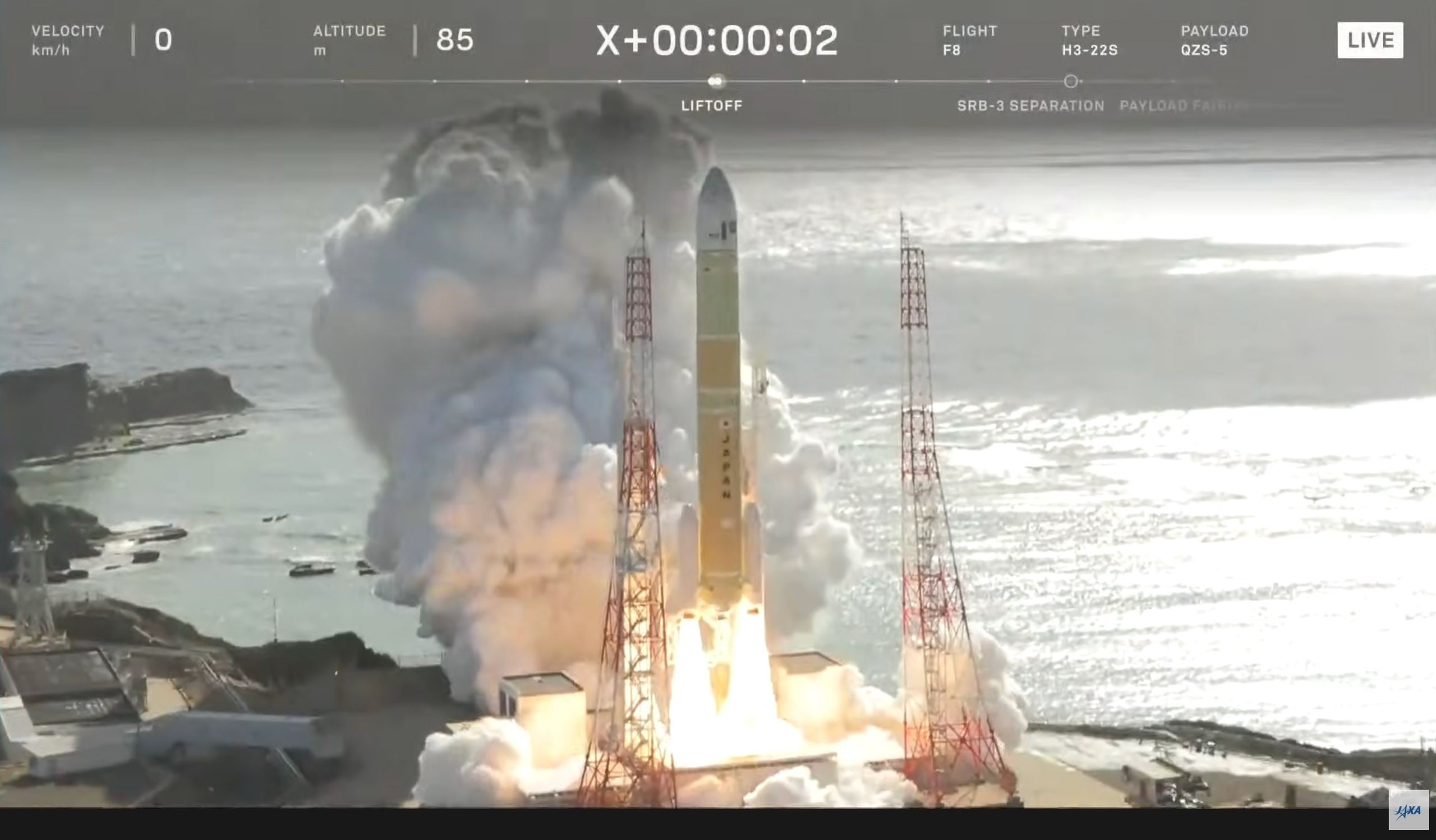
Japan’s latest attempt to expand its domestic satellite navigation system suffered a setback on Sunday when its H3 rocket failed to properly deploy the Michibiki 5 satellite. The launch, which took place from the Tanegashima Space Center, saw the rocket’s second-stage engine malfunction during ignition, preventing the satellite from reaching its intended orbit.
Mission Details and Failure Cause
The H3 rocket lifted off at 8:51 p.m. EST (0151 GMT) carrying the 4,800-kilogram (10,580 pounds) Michibiki 5, a key component of Japan’s Quasi-Zenith Satellite System (QZSS). According to the Japan Aerospace Exploration Agency (JAXA), the second-stage engine did not ignite normally and shut down prematurely. This failure meant the satellite could not be placed into its designated geosynchronous orbit.
Significance of the QZSS System
The QZSS is designed to complement the widely used Global Positioning System (GPS), enhancing positioning accuracy and reliability, particularly in the Asia-Oceania region. Unlike traditional GPS, QZSS satellites are positioned to improve signal availability in areas where GPS coverage is often obstructed by terrain or buildings. This system allows for more accurate navigation in densely populated or mountainous regions, making it crucial for applications like autonomous vehicles, precision agriculture, and disaster response.
Recent H3 Rocket Performance
The H3 rocket is the successor to Japan’s reliable H-2A launcher, which was retired earlier this year after 25 years of service. While the H3 had achieved five consecutive successful launches after a failed debut in March 2023, this latest incident highlights ongoing challenges in its operational reliability. JAXA has already formed a task force led by agency chief Hiroshi Yamakawa to investigate the cause of the failure.
Future Plans and Implications
Japan intends to expand the QZSS network to a total of 11 satellites, but this latest setback may delay those plans. The Michibiki 5 launch failure underscores the inherent risks in space missions and the need for continued investment in robust testing and quality control. JAXA has apologized for the failed launch, acknowledging the high expectations placed on the project by stakeholders and the public.
The H3’s inconsistent performance raises questions about whether this new launcher will provide a reliable platform for future missions.