


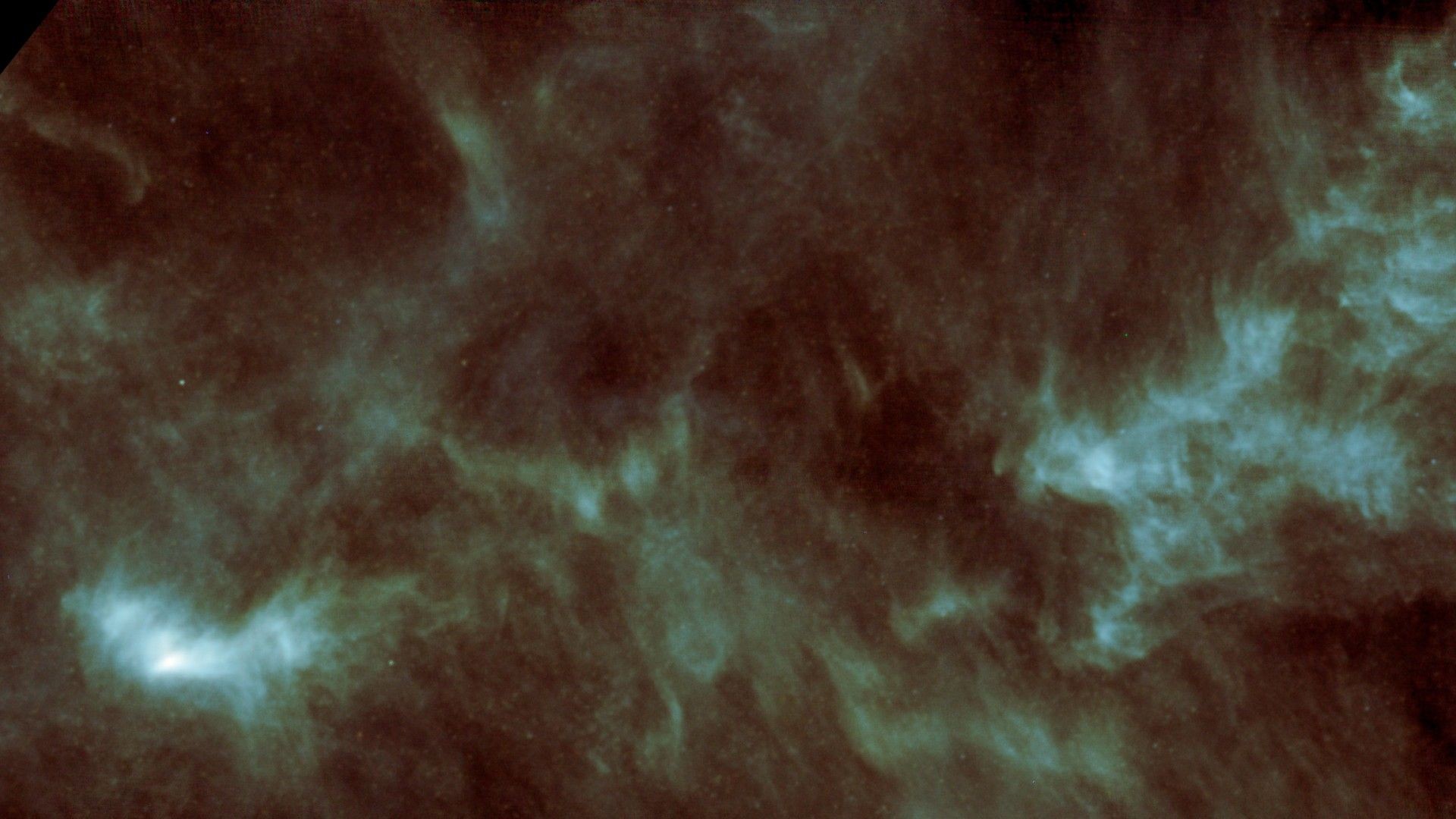
Astronomers have discovered a crucial organic molecule, methanimine, within a collapsing gas cloud that will soon become a star. This finding suggests that the fundamental ingredients for life may be seeded into planetary systems from their earliest stages of formation.
The Discovery in L1544
The molecule was detected in L1544, a dense clump of gas and dust 554 light-years away within the Taurus Molecular Cloud. This cloud is not yet a star; it’s on the verge of gravitational collapse, meaning it will eventually form a star and potentially a system of planets. The presence of methanimine indicates that these future planets could inherit a “starter kit” of organic molecules before they even exist.
Methanimine: A Key Chemical Intermediate
Methanimine (CH2NH2) is a simple but significant molecule in organic chemistry. It’s a stepping stone between basic atoms and complex molecules like amino acids, which are the building blocks of proteins. Even if broken apart, methanimine still provides essential elements for life: carbon, hydrogen, and nitrogen.
This discovery isn’t about finding life itself, but about understanding how the conditions for life can emerge naturally in the universe.
Why This Matters: Planetary Formation
Understanding how methanimine forms in pre-stellar cores like L1544 could explain how planetary systems acquire their initial organic chemistry. The process isn’t random; the cloud seems to be actively assembling these compounds even before the star ignites.
The outer layers of L1544, where temperatures are warmer, appear to be the primary locations for methanimine production. As material falls inward, it distributes the molecule throughout the core. This means that when the cloud collapses to form a star and its surrounding disk, a significant amount of methanimine will likely remain in the outer regions where planets will eventually form.
From Gas Cloud to Habitable Worlds
As planets coalesce from this disk, they may already contain the basic building blocks for amino acids and other complex organic molecules. If these planets are habitable, these ingredients could potentially lead to the development of life.
“This demonstrates that key prebiotic nitrogen and carbon chemistry remains active even in the cold, quiescent phase preceding collapse, ensuring that organic precursors… can be inherited by the next generation of forming stars and planets,” researchers wrote.
This discovery reinforces the idea that the universe may be primed for life’s emergence through natural chemical processes occurring long before planets even exist. The conditions for life aren’t just about finding a habitable planet; they begin with the chemical legacy of a star’s birth.


