Alex Garland’s 28 Years Later trilogy isn’t just a continuation of the cult horror classic 28 Days Later ; it’s a brutal, intellectual expansion of the zombie genre. The films dissect violence, societal decay, and the very nature of what it means to be human in a world overrun by the infected. The middle installment, The Bone Temple, directed by Nia DaCosta, raises uncomfortable questions about evolution, morality, and whether the traditional “us vs. them” dynamic between survivors and the infected still holds.
The Infected Are Changing
The original 28 Days Later introduced the “rage virus,” turning people into hyper-aggressive killers. But this new trilogy complicates that simple premise. 28 Years Later (2025) revealed that the infected are speciating – evolving beyond mindless hordes. The emergence of “Alphas” like Samson, capable of strategic thought, suggests that the infected aren’t just animals; they’re becoming something else entirely.
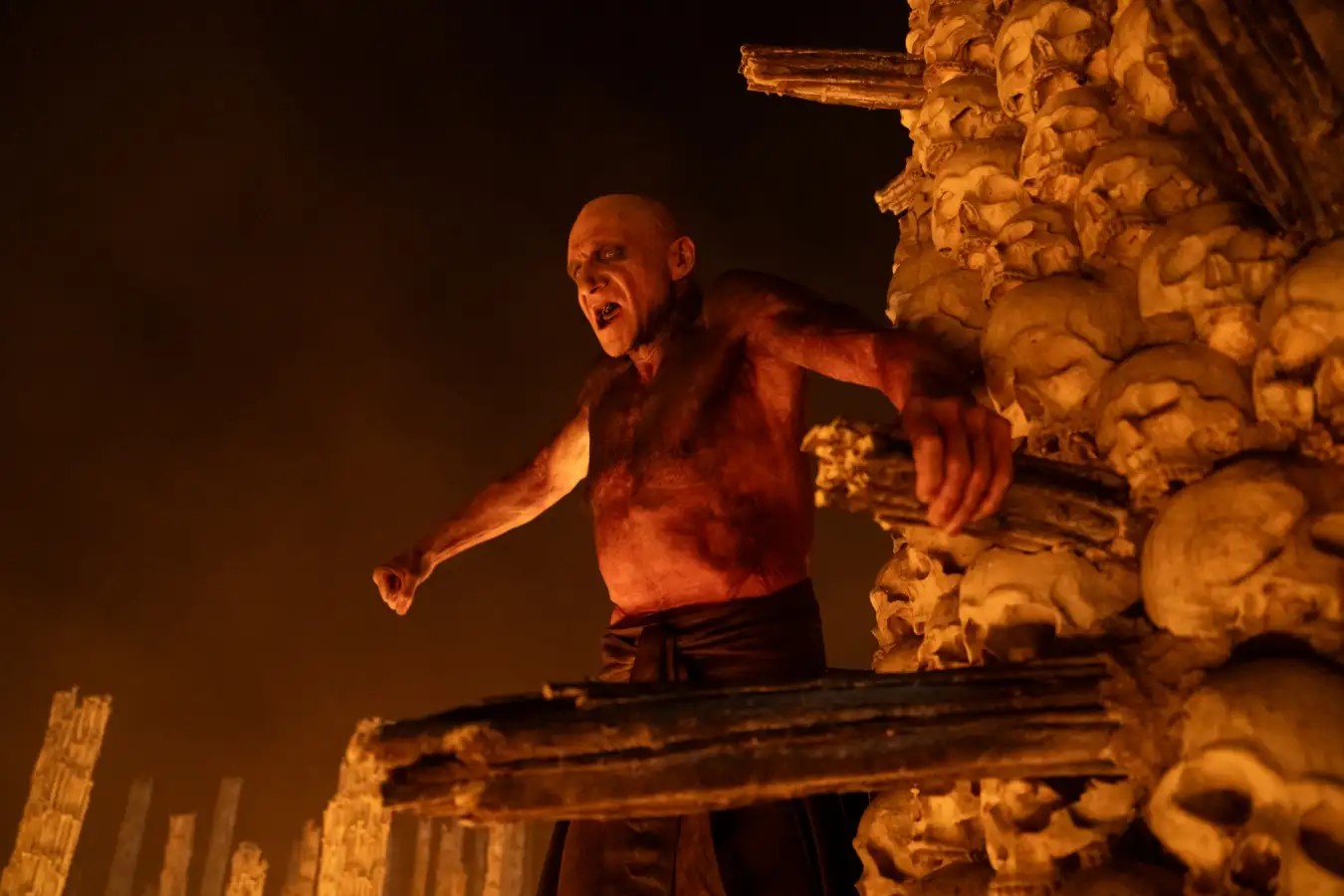
This evolution isn’t limited to Alphas. The Bone Temple introduces the “Jimmys,” a terrifying gang of youths who’ve devolved into ritualistic savagery. Stripped of identity and dressed in the garb of disgraced entertainer Jimmy Savile, they operate as a collective under the brutal command of Sir Lord Jimmy Crystal. Their regression highlights a disturbing question: is humanity itself capable of similar moral collapse?
Blurring the Lines Between Infected and Human
The series continually asks us to reassess how we view the infected. Dr. Ian Kelson, a recurring character, spends his time studying Samson, the Alpha. Through morphine-induced states and observation, Kelson begins to see signs of higher consciousness in the infected. He wonders if Samson retains memories, if he yearns for peace, or if he simply exists in a perpetual state of animalistic bliss.
This investigation leads Kelson to a startling realization: the line between infected and human may be collapsing. The films suggest that the infected aren’t merely mindless monsters; they’re evolving, potentially recovering aspects of their former selves. Decades into the outbreak, the rigid separation between “clean” and “infected” may be a false dichotomy. The series challenges the very notion of what constitutes humanity.
The Future of the Franchise
The Bone Temple doesn’t offer easy answers. It forces audiences to confront uncomfortable truths about violence, regression, and the potential for evolution in the most horrific circumstances. The film hints that our understanding of the infected must evolve. As the trilogy nears its conclusion, the possibility emerges that the infected might not just survive but inherit the Earth… or even become the heroes of the story. The next installment promises to push these boundaries further, leaving audiences to question whether humanity is worth saving at all.
The series’ central argument isn’t about surviving the apocalypse; it’s about what happens after survival, when the rules have changed, and the monsters might be more human than we are.