

The most efficient way to connect four towns arranged as the corners of a square isn’t a straight-line grid, but a network that looks like overlapping hexagons. This seemingly counterintuitive solution, which cuts the total road length by roughly 4%, can be demonstrated with nothing more than soapy water.
The Puzzle & The Unexpected Answer
The challenge asks for the shortest road system linking four points in a square formation. While connecting opposing towns with straight lines seems logical, a minimal network emerges when all intersection points form 120-degree angles. This creates a pattern resembling a tessellation of hexagons.
Soap Bubbles as an Optimization Tool
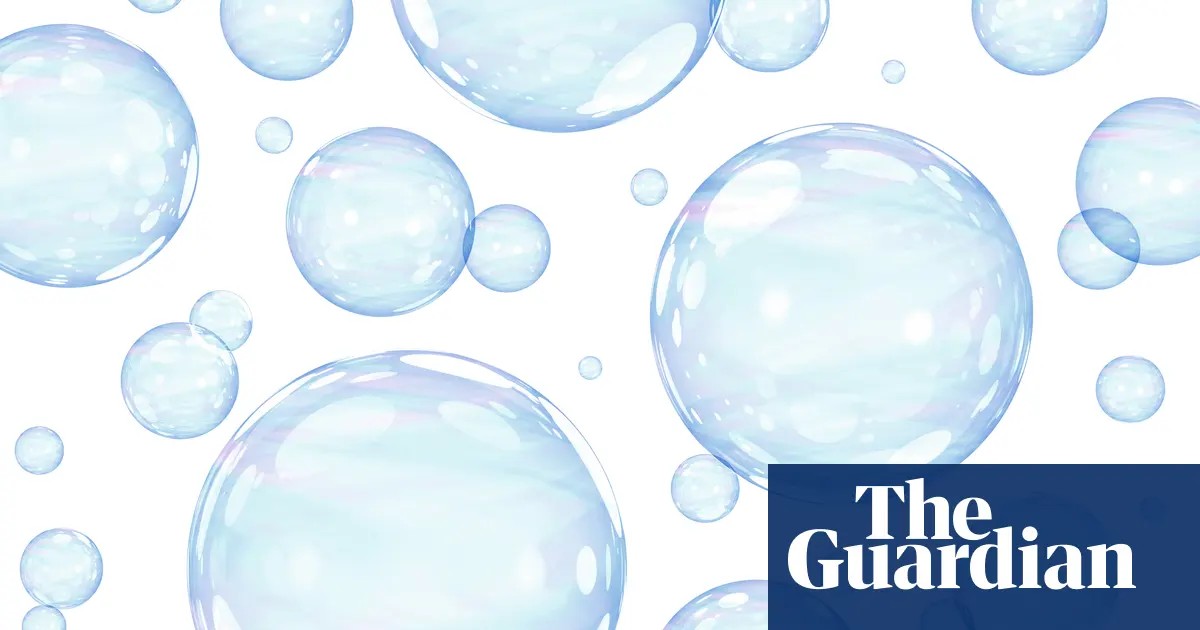
The beauty of this solution lies in how easily nature finds it. By submerging a model square with four corner posts into soapy water, bubbles naturally form, displaying the optimal geometry. This method bypasses complex calculus, proving that physical systems can instinctively resolve optimization problems. The phenomenon was demonstrated in a video by James Grime, showcasing the elegance of natural problem-solving.
Hexagons & Efficiency in Nature
The 120-degree angles at intersections create hexagons, a shape frequently observed in nature. Bees, for example, utilize hexagonal structures to efficiently store honey, demonstrating that this geometry minimizes surface area while maximizing storage capacity. Nature’s preference for hexagons isn’t coincidental; it’s mathematically optimal.
Further Exploration
For a deeper dive into the science behind soap films and their computational abilities, a seminal 1976 article from American Scientist, titled “The Soap Film: An Analogue Computer,” provides valuable insight.
This problem highlights how natural systems often outperform human calculations in optimization, suggesting that nature’s design principles can be applied to solve complex engineering and logistical challenges. The elegance of the solution, revealed by soap bubbles, demonstrates that simplicity and efficiency are inherently linked.