


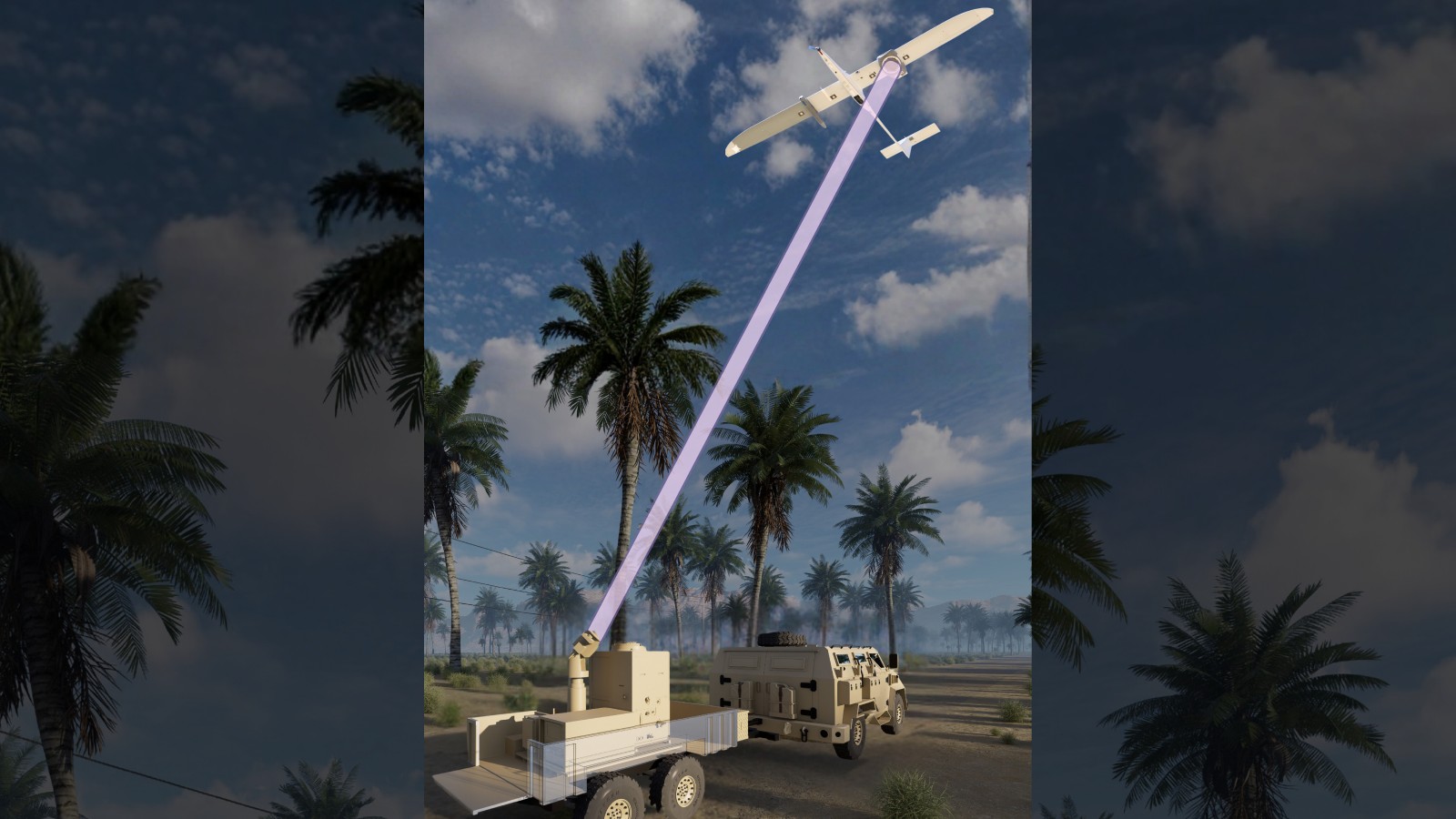
Engineers have developed a groundbreaking wireless power system that uses laser beams to charge drones mid-air, potentially unlocking continuous flight capabilities. The technology, spearheaded by PowerLight Technologies, pairs a high-powered ground transmitter with a lightweight receiver installed on the drone itself. This allows for sustained energy delivery at kilowatt levels – a significant leap beyond typical laboratory lasers operating at milliwatt scales.
How the System Works
The core innovation lies in the transmitter’s ability to precisely track and lock onto “cooperative” targets (drones equipped with the receiver). Advanced software and hardware combine to ensure safe and efficient power transfer, even while the drone is in motion. PowerLight states the transmitter can operate effectively at altitudes up to 5,000 feet (1,500 meters), well within the operational range of many commercial and military drones.
For comparison, the widely used Raven RQ-11B drone operates between 150-1,000 feet (46-305 meters) above ground, while larger models can reach altitudes exceeding 60,000 feet (18,288 meters). This new system doesn’t replace these capabilities but extends flight endurance dramatically.
Real-Time Control and Data Exchange
The PowerLight system isn’t just about power delivery; it’s about integrated control. The transmitter communicates with the drone’s onboard avionics, exchanging telemetry data in real-time. This interoperability enables operators on the ground to monitor battery levels and dynamically adjust power transmission for optimal efficiency.
According to Tom Nugent, CTO and co-founder of PowerLight, “We are building an intelligent mesh energy network capability… Our transmitter communicates with the UAS, tracks its velocity and vector, and delivers energy exactly where it’s needed.” The company has already validated the tracking and power transmission algorithms through successful ground-based tests.
From Sunlight to Laser: How the Receiver Works
The drone-mounted receiver weighs only 6 pounds (2.7 kilograms) and uses a specialized photovoltaic laser power converter. This technology functions similarly to solar cells, but is optimized for high-intensity laser light instead of broad-spectrum sunlight. The receiver also includes a control module that relays real-time operational data back to ground operators and establishes a two-way optical communication link.
Military Applications and Future Testing
The system was developed with the support of the U.S. Department of Defense (DoD) and will be integrated into Kraus Hamdani Aerospace’s K1000ULE drone. This long-range, high-endurance drone is designed for persistent missions supporting the U.S. Navy and Army.
Previous research, including a Defense Advanced Research Projects Agency (DARPA) demonstration, has already proven the feasibility of long-distance laser power transfer (over 800 watts at 5.3 miles). However, PowerLight’s system represents a significant step toward practical deployment on mobile platforms.
Full flight tests are scheduled for early this year, marking the next critical phase in validating this revolutionary technology.
This laser-based power system promises to reshape drone operations, enabling extended missions and potentially eliminating the limitations imposed by traditional battery constraints. The integration with existing military platforms suggests a clear path toward real-world applications in intelligence, surveillance, and reconnaissance.


