




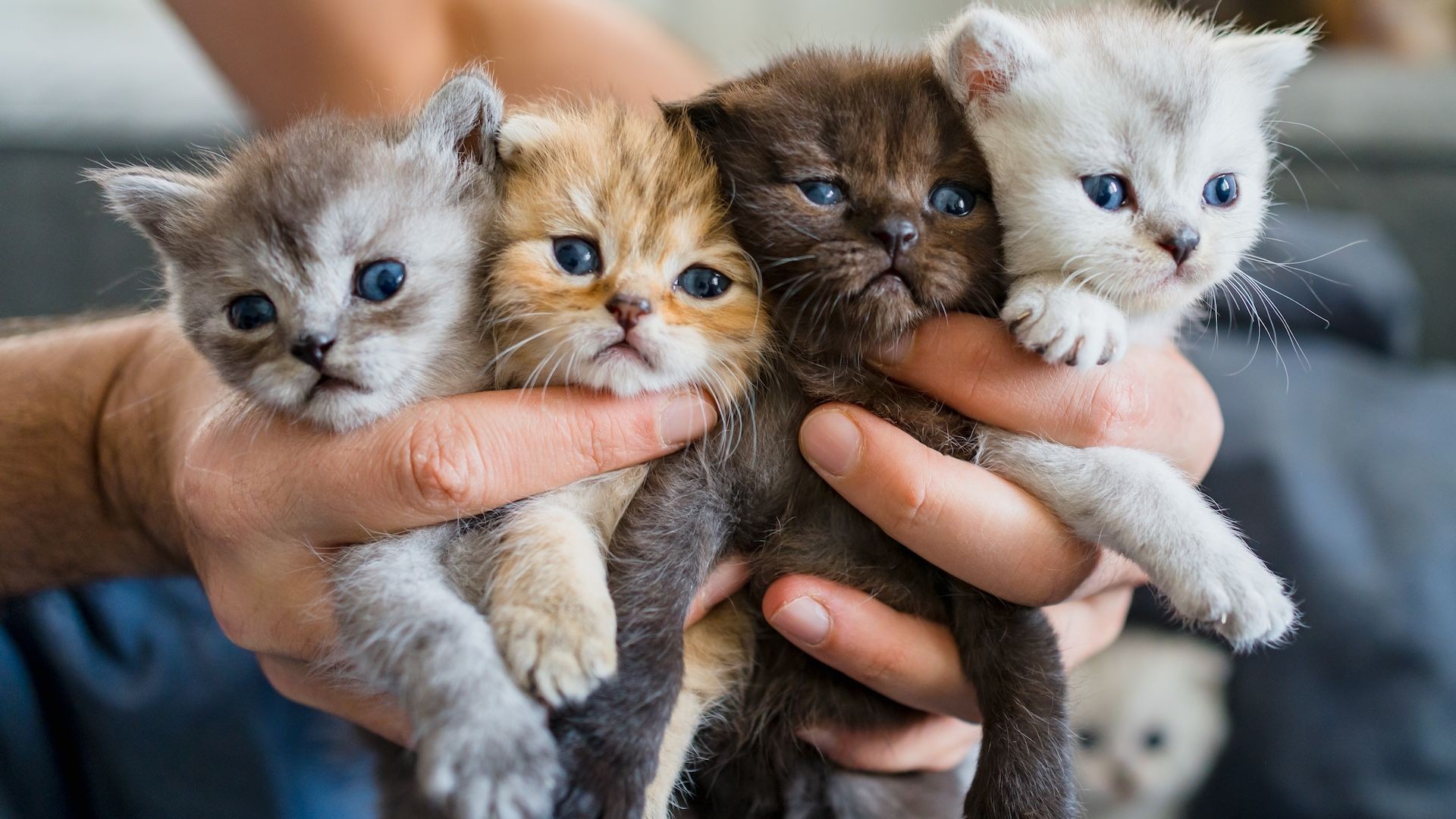
Kittens from the same litter often display striking differences in coat color, pattern, and length – sometimes appearing barely related. Unlike human siblings, who typically share strong resemblances, cat littermates can be a patchwork of black, white, tabby, tortoiseshell, and long or short fur. This isn’t a quirk; it’s a result of complex genetics and unique feline reproductive biology.
The Complicated Genetics of Cat Coats
The Cat Fanciers’ Association recognizes a wide range of coat variations, from solid colors to intricate patterns like Bengal rosettes or Abyssinian ticking. These differences stem from a complex interplay of genes where some dominate others. As biologist Jonathan Losos explains, “There are a number of different genes involved in cat color and pattern, and it’s particularly complicated because some genes overwrite other genes.”
Genes dictate solid colors, spotting, patterns, and hair length in a hierarchical structure. A dominant white gene, for instance, can mask any underlying color. Other genes control tabby patterns, combining with color genes to create diverse coats. Sex-linked genes further complicate matters: calico and tortoiseshell patterns are almost exclusively found in female cats due to their presence on the X chromosome. Even a few gene combinations can produce drastically different outcomes, explaining why littermates can look so dissimilar.
Multiple Fathers: A Key Factor
The biggest reason for genetic variation within a litter is that female cats can have multiple fathers for the same litter. Cats are induced ovulators, meaning they release eggs only after mating. This process allows them to release multiple eggs over several days, and if they mate with different toms during that time, they can become pregnant by more than one male.
This phenomenon, called heteropaternal superfecundation, means siblings in the same litter may share as little as 25% of their genes. It’s not rare; dogs, sheep, and even humans have been documented with litters having multiple fathers.
Why Does This Happen?
Scientists aren’t certain why heteropaternal superfecundation is so common in cats, but there are theories. Induced ovulation may be an evolutionary adaptation to prevent wasted reproductive effort: releasing eggs only after mating ensures no energy is spent on unfertilized ones.
Additionally, multiple paternity increases genetic diversity within cat families, which can boost survival rates. Bruce Kornreich of the Cornell Feline Health Center suggests this could be an efficient mating strategy.
Urban vs. Rural Litter Diversity
Heteropaternal superfecundation is far more common in urban areas where cat populations are dense and tomcat territories overlap. A 1999 study found that 70% to 83% of urban litters had multiple fathers, compared to only 0–22% in rural areas. This makes diverse litters the norm rather than an exception in many environments.
In essence, cat siblings can look drastically different due to a combination of complex coat genetics and the ability of females to become pregnant by multiple males in quick succession. This ensures greater genetic diversity, and makes the concept of a “family resemblance” far less predictable in the feline world.