The dream of humanity becoming a multi-planetary species faces a significant biological hurdle: reproduction in space is far more difficult than previously imagined. While ambitious plans for long-term space settlements abound – championed by figures like Elon Musk – recent research suggests mammalian reproduction, including human, may be fundamentally incompatible with the conditions of microgravity.
Sperm’s Struggle in Zero-G
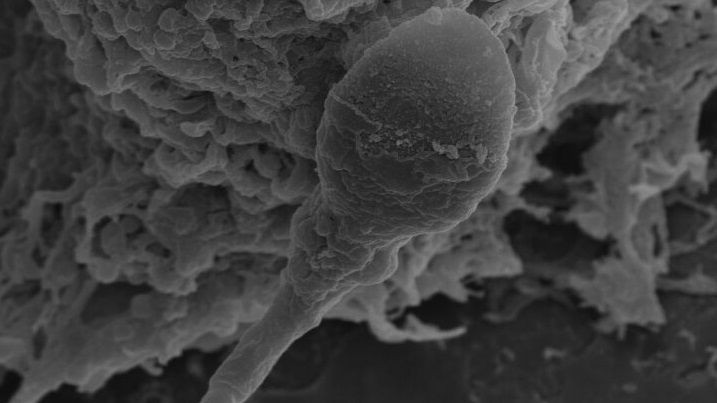
A groundbreaking study from the University of Adelaide in Australia reveals that sperm cells from mammals (humans, mice, and pigs) struggle to navigate the female reproductive tract in the absence of gravity. The research, using a simulated microgravity environment, found that nearly 30% fewer sperm successfully reach the egg compared to normal conditions. This isn’t just a minor inconvenience; sperm rely on gravity to orient themselves and detect chemical signals from the egg.
The study also showed that even when fertilization occurs, the resulting embryos suffer. Initial blastocyst development appears stronger under short microgravity exposure – likely due to natural selection favoring the most resilient sperm – but prolonged exposure leads to significant deterioration. The rapid cellular changes during early embryonic development are demonstrably harmed by the absence of gravity.
Why Gravity Matters
Scientists understand that sperm navigation isn’t solely chemical. The cells also use gravity to maintain orientation and detect surfaces. As reproductive biologist Nicole McPherson explains, “To know where surfaces are, you need to understand your position in time, and for that you need gravity.” This highlights a critical yet often overlooked factor in space colonization: the human body has evolved to rely on Earth’s gravity for fundamental biological processes.
Implications for Space Travel and IVF
These findings have far-reaching implications. Maintaining long-term space settlements hinges on in-situ reproduction; relying solely on Earth-based colonization isn’t sustainable. The challenges extend beyond just settlements, potentially impacting space tourism and even the possibility of “lunar honeymoons” with the hope of conception.
However, the research isn’t entirely bleak. The initial selection of stronger embryos in short microgravity exposures could also lead to advancements in terrestrial IVF technologies, offering new insights into treating infertility. Further experiments in partial gravity (like on the Moon or Mars) are planned to explore potential mitigation strategies.
The fundamental truth remains: human reproduction in space is significantly more complicated than anticipated. Overcoming this biological barrier is crucial for the long-term success of space colonization, demanding further research and innovative solutions before humanity can truly become a space-faring species.