Astronomers have constructed a remarkably detailed 3D map of the universe, offering an unprecedented glimpse into its early stages. Unlike previous cosmic surveys, this map doesn’t rely on individual galaxies but on the collective glow of hydrogen gas – the most abundant element – that permeated the cosmos between 9 and 11 billion years ago. This technique reveals structures previously hidden from view, providing vital data for understanding how the universe evolved and how dark energy shapes its expansion.
The Power of Collective Light
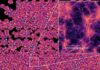
The new research, published in The Astrophysical Journal and conducted as part of the Hobby-Eberly Telescope Dark Energy Experiment (HETDEX), leverages a method called line-intensity mapping. Instead of isolating bright galaxies, this approach captures the faint but pervasive Lyman-alpha light emitted by hydrogen when excited by nearby stars. This allows astronomers to study the universe not as a collection of distinct objects, but as a continuous, luminous medium.
Why this matters: Existing cosmic maps often focus on visible galaxies, leaving out vast regions of interstellar gas and faint structures critical for understanding star and galaxy formation. This new map fills that gap, revealing the “sea of light” that defined the early universe.
From Individual Objects to Universal Structures
Traditional astronomy excels at studying individual celestial bodies in detail. Cosmology, however, demands a broader perspective. HETDEX intentionally avoids pinpointing galaxies. Instead, it scans entire regions of the sky, gathering integrated light from countless sources simultaneously. This is akin to viewing a landscape through a slightly blurred lens: less detail on individual points, but a complete picture of the overall terrain.
As study co-author Julian Muñoz explains, “Intensity mapping captures all the light, not just the brightest spots.” The project has already analyzed over 600 million spectra across an area larger than 2,000 full moons, creating an unparalleled dataset.
Unlocking the Secrets of Dark Energy and Gravity
The new 3D maps will help refine cosmological models by comparing observed data with theoretical simulations. By studying how galaxies cluster together, researchers can better understand the role of gravity in shaping the universe’s structure. This is crucial for measuring large-scale density fluctuations, which are influenced by dark energy, the mysterious force driving the accelerating expansion of the universe.
The challenge ahead: Separating the faint signals from ancient galaxies from foreground noise (including Earthly contaminants like moonlight and atmospheric interference) remains difficult. Refining noise-reduction techniques is the next critical step.
A Golden Age of Cosmic Mapping
The HETDEX project, utilizing the Hobby-Eberly Telescope in Texas, represents a significant leap forward in cosmology. The success of this approach signals a “golden age” for mapping the cosmos, with new instruments poised to further refine our understanding of the universe’s origins and evolution. As astronomers continue to zoom out, they will undoubtedly uncover even more hidden structures and unlock deeper insights into the fundamental forces shaping reality.