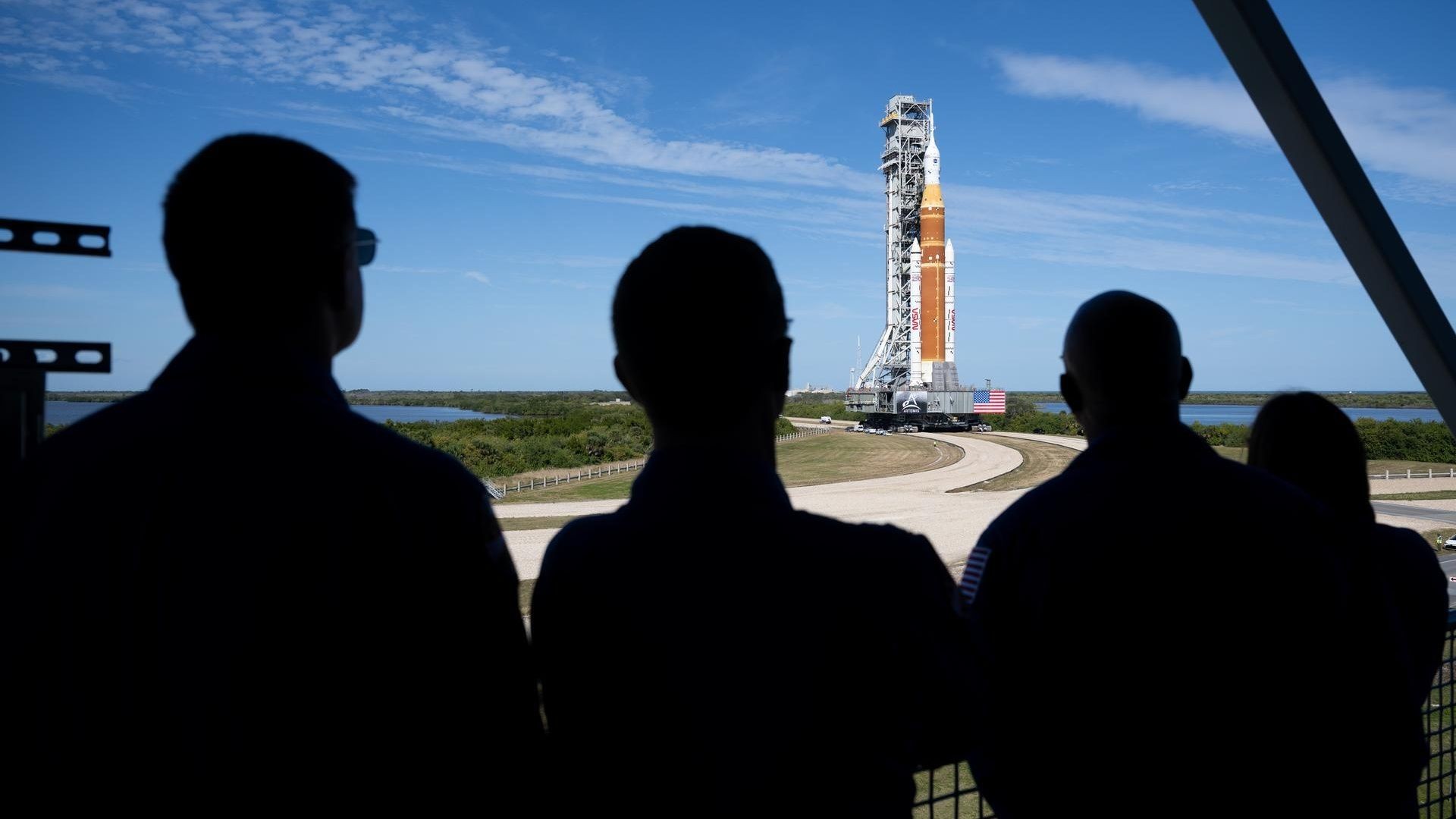
NASA’s Artemis 2 mission is set to launch imminently, marking humanity’s return to lunar proximity after a 50-year hiatus. This isn’t merely a symbolic flight; it’s a meticulously planned scientific expedition designed to push the boundaries of human space travel and prepare for future missions to Mars. The 10-day journey, carrying astronauts Reid Wiseman, Victor Glover, Christina Koch, and Jeremy Hansen, will take the Orion spacecraft farther into deep space than any human has ventured before — roughly 4,700 miles beyond the far side of the moon.
The Science Behind the Flight
Artemis 2 is structured as a major scientific undertaking alongside its hardware testing. The primary goal is to gather crucial data on the effects of deep-space environments on the human body, including radiation exposure, health, and performance. The astronauts themselves are the core subjects of several onboard experiments.
Bone Marrow and Radiation Risks: A key study, AVATAR (“A Virtual Astronaut Tissue Analog Response”), employs lab-grown human tissue to simulate organ responses to space radiation. Bone marrow, vital for blood and immune cell production, is particularly susceptible to radiation damage, making it a focal point for assessing health hazards during extended missions. By comparing the tissue’s molecular response to spaceflight with ISS data and pre/post-flight astronaut samples, researchers aim to refine personalized healthcare strategies for long-duration travel. Previous research confirms even shorter space stints cause bone loss, highlighting the severity of deep-space risks.
Deep-Space Stress Testing: The ARCHeR experiment will monitor astronaut stress levels, sleep patterns, movement, and cognitive function using wearable devices. This real-time data will provide insights into how confinement, daily routines, and isolation impact health and teamwork in deep space. Additionally, astronauts will collect saliva samples to track immune system changes linked to radiation and stress, including the reactivation of dormant viruses like chickenpox and shingles, a phenomenon previously observed on the ISS. Comprehensive health monitoring will continue for months before and after the mission, including balance tests and simulated spacewalks to assess adaptation to gravity.
Radiation Exposure Monitoring: Unlike astronauts on the ISS, the Artemis 2 crew will venture beyond Earth’s protective magnetosphere, exposing them to significantly higher radiation levels. Personal dosimeters and onboard sensors will track exposure in real-time, alerting the crew to solar storms or other radiation spikes. This data, combined with measurements from international partner cubesats, will improve understanding of radiation behavior within Orion and its impact on human health experiments.
A Unique Lunar Perspective
The mission also offers a rare opportunity to observe the moon from a vantage point not seen in over half a century. As Orion loops around the far side, astronauts will use a three-hour window to study terrain previously inaccessible to direct human observation. The moon will appear roughly the size of a basketball at arm’s length.
The crew will photograph and describe features shaped by ancient impacts and lava flows, with a focus on the Orientale Basin – a 600-mile-wide impact scar marking the boundary between the near and far sides. They may also witness meteoroid strikes or unexplained dust clouds, providing valuable data for lunar science.
Artemis 2 is more than just a test flight; it’s a foundational step towards sustained human presence beyond Earth. The data gathered will directly inform future lunar landings and pave the way for crewed missions to Mars.
This mission’s success is vital for the long-term viability of space exploration. The insights gained will shape future mission design, astronaut health protocols, and our understanding of the challenges inherent in deep-space travel.