


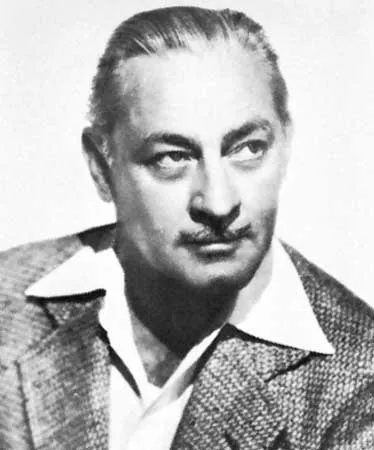
Born in Philadelphia on February 15, 1882, John Barrymore didn’t just act; he occupied space with a magnetism that early cinema struggled to contain. By the time he died in Hollywood on May 29, 1942, he had already cemented a legacy that transcended his own volatile life. The press dubbed him “The Great Profile,” a title that stuck because his jawline and intensity were as much a part of his brand as any script he read.
He wasn’t just a silent film heartthrob or a talkies era survivor. He was a powerhouse on stage, particularly when tackling William Shakespeare. Audiences flocked to see his Richard III and Hamlet, performances that showcased a depth far removed from the debonair leading man persona that box offices loved. He could shift from charming rogue to tragic prince in a heartbeat, leaving critics wondering which version was the real man.
“He was a force of nature on the stage and a visual icon on screen.”
His work in plays like Henry VI, Part 3 demonstrated a range that Hollywood often wasted, but never fully ignored. Even today, when we look back at the architects of American stardom, Barrymore’s name comes up not just for his looks, but for the sheer theatrical weight he brought to every role. He died young, but the profile he left behind remains one of the most distinct silhouettes in entertainment history.
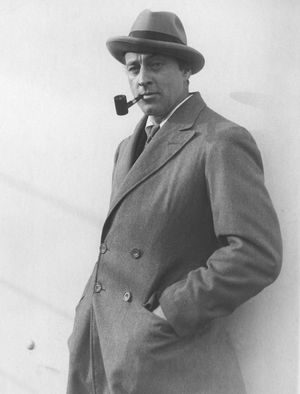

The Stage Name Before the Silver Screen
Theatrical blood ran thick in the Barrymore household. Maurice and Georgiana were stage actors, and their children—Ethel, Lionel, and John—would soon dominate the boards too. John didn’t start with the spotlight, though. He fled to Paris to study painting, chasing an artistic life far from the footlights. Then he came back.
- That’s when the curtain rose on his acting career.
He wasn’t an instant tragedy king. At first, he was a light comedian. Popular. Fun to watch. But the real magic happened when he dropped the jokes. He wanted weight. He wanted pain. And he found it in the serious roles that would cement his legacy.
Roles That Defined a Generation
Critics didn’t just like him; they crowned him. The greatest tragedian of his generation. That’s the headline that followed him for decades. But how did a Paris-trained painter become the king of Shakespeare? It wasn’t overnight. It was a series of stage triumphs that built the myth.
The list reads like a history of American theater in the teens and twenties:
- Justice (1916): The breakthrough that proved he could carry a heavy dramatic load.
- Peter Ibbetson (1917): A hit that solidified his status as a serious leading man.
- The Jest (1919): More success, more acclaim, more demand for his intense presence.
- Richard III (1920): Shakespearean ambition. Dark. Complex. Powerful.
- Hamlet (New York, 1922; London, 1925): The ultimate test. He didn’t just play the Prince of Denmark; he owned the role.
Why did these matters so much? Because they shifted the public’s perception. You weren’t watching a comedian trying on costumes. You were watching a force of nature. The stage wasn’t just a platform; it was a proving ground. And when he stepped onto the boards in London in 1925, the verdict was already written in New York three years prior.
He wasn’t just acting. He was embodying a depth that audiences hadn’t seen before. The painter’s eye for detail, the family’s training, the years of light comedy that taught him timing—it all coalesced into something rare. A tragedian who didn’t just recite lines but lived them.
The film cameras would eventually come calling. But before the silver screen, there was the stage. And on the stage, John Barrymore didn’t just perform. He conquered.
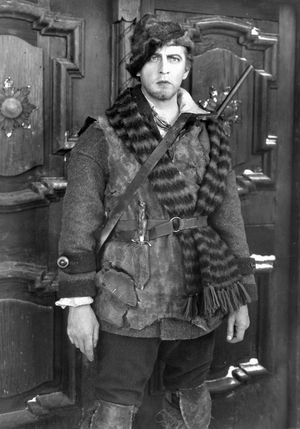

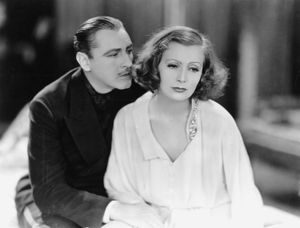


John Barrymore didn’t just enter the film industry in 1913. He invaded it.
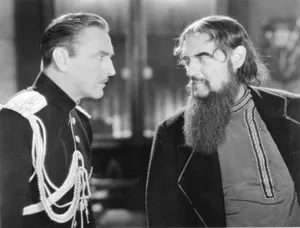
By the time the talkies rolled in, he was already a heavyweight. You want the resume? It’s stuffed with gold. Dr. Jekyll and Mr. Hyde (1920) gave us a man tearing himself apart. The Beloved Rogue (1927) let him play a swashbuckling villain with a heart of gold. He took on Moby Dick (1930) and Rasputin and the Empress (1932). That last one is the only movie where John shared the screen with his famous siblings. A rare family reunion before the storm.
Then came the golden age of ensemble casts. Grand Hotel (1932). Dinner at Eight (1933). He played a lawyer in Counsellor-at-Law (1933). He wore a mask in Romeo and Juliet (1936) and The Great Profile (1940)—where he actually made fun of his own legendary good looks.
“His talents were prodigious.”
He was considered one of the greatest actors of the silent and early talkie eras. Handsome? Yes. Talented? Undeniably. But the public didn’t just love his craft. They loved the chaos.
The flamboyance. The outrageousness. The drinking.
It wasn’t just a quirk. It was a toll. A heavy one.
His health cracked under the pressure. His career stuttered. The man who could be Iago or Duke Orsino couldn’t save himself. The drink took more than his liver. It took his consistency.
So which was the real John Barrymore? The actor who could charm an audience into silence with a glance? Or the man who couldn’t stay sober long enough to sign a contract?
The films remain. The behavior destroyed him.
Diana Barrymore’s life was a tragedy written in real time. Born in 1921, she chased the stage just like her famous father, but alcoholism kept her promising career in perpetual limbo. The struggle ended in 1960 when she took her own life. Her story, detailed in the 1957 memoir Too Much, Too Soon, was adapted into a 1958 film, turning her private pain into public spectacle.
Meanwhile, her brother John Blyth Barrymore Jr. carved out a different path. Born in 1932 and known professionally as John Drew Barrymore, he worked in film but never quite reached the stratospheric fame of the family name. He lived until 2004.
He did, however, leave behind a legacy that outlasted both siblings. His daughter, born in 1975, carried the family name forward. She is better known simply as Drew Barrymore, the actress who would eventually eclipse the earlier generation’s notoriety with mainstream stardom.
The Barrymore bloodline didn’t just continue; it evolved from stage-bound tragedy to Hollywood resilience.
While Diana and John Drew’s lives were marked by the weight of their surname, their daughter managed to redefine it. The lineage connects a chaotic past to a polished present.
You can trace the direct line from the original John Barrymore through John Drew Barrymore to the current star. It’s a straight shot through three generations of performers.
The contrast is stark. Diana’s story is one of loss. John Drew’s is one of quiet existence. Drew’s is one of sustained success.
The name Barrymore still opens doors. It still carries weight. But the stories attached to it have changed significantly.
One generation burned bright and fast. Another faded quietly. The third learned to keep the lights on.
The family tree branches out from there, but the core remains. The stage, the screen, the struggle. It’s all still there, just in different packages.
Does the name mean more now than it did then? Maybe. The context shifts. The expectations change. The pressure remains.
Drew Barrymore didn’t just inherit the name. She inherited the history. All of it. The good, the bad, the broken.
She carries it differently. Or maybe she carries it lighter. Hard to say.
The legacy isn’t static. It moves with whoever is holding it next.
And that next person is still writing their chapter. We’re still reading it.