


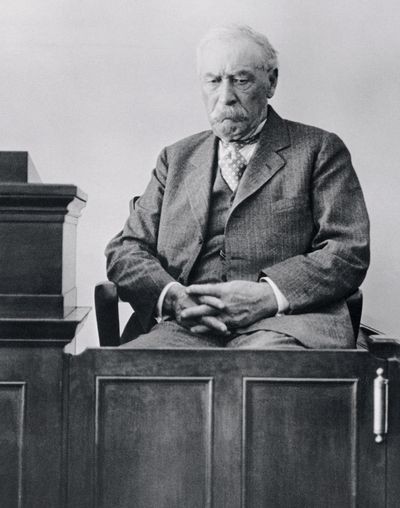

William Mulholland is the reason Los Angeles exists as a sprawling metropolis in the desert. Born in Belfast in 1855 and raised in a house where his father beat him for failing in school, Mulholland ran away at fourteen. He spent four years on the Glennifer, a British merchant ship crossing the Atlantic, before washing ashore in New York City. He bounced around the Midwest doing odd jobs until 1876, when he and his brother Hugh secretly stowed away on a ship heading to Panama to follow their uncle.
They got caught. Forced to work to pay for the voyage, they were abandoned in Panama after their uncle left them behind. The brothers hitchhiked their way north to San Francisco and eventually rode horses into Los Angeles in early 1877. Mulholland joined the Los Angeles City Water Company as a ditch digger. By 1902, he was the superintendent of the newly formed municipal water department. He was a self-taught engineer who saw what no one else did: the city was running out of water.
Why the Owens River Was the Only Option
From 1892 to 1904, a brutal drought struck Southern California. The local water table dropped. Crops failed. The city’s growth was stalling. Mulholland looked east, past the Mojave Desert, to the Sierra Nevada. There, southeast of Yosemite National Park, the Owens River flowed with abundant fresh water. The distance was 233 miles, or 375 kilometers. At the time, no aqueduct in the world came close to that length.
The engineering challenge was immense. How do you move water across a desert without pumps? Mulholland’s answer was gravity. The Sierra Nevada slopes were higher than the San Fernando Valley. The water would flow downhill, entirely on its own, for the entire journey. It was a bold design. If the slope was even slightly wrong, the water would stagnate or overflow. The construction took nine years, from 1904 to 1913.
The “Take It” Moment and the Cost to the Valley
When the aqueduct was finally dedicated in 1913, Mulholland stood before the crowd and said, “There it is. Take it.” It was a simple, powerful sentence. It signaled the end of scarcity for Los Angeles. The city’s population and economy exploded in the decade that followed.
But the water had to come from somewhere. The Owens River Valley was home to farmers, ranchers, and small towns that depended on that river for survival. The city’s plan was kept secret from the valley residents until all property and water rights were purchased. A prominent Los Angeles businessman, former mayor Frederick Eaton, handled the acquisitions.
The valley people felt betrayed. They saw their lifeblood being siphoned off to feed a distant city that had hidden the truth from them. The hostility was real and dangerous. Some residents in the Owens Valley attempted to destroy the aqueduct with dynamite. The project saved Los Angeles, but it devastated the eastern valley. It created a lasting tension between the city and its water source.
Mulholland’s genius built the modern Los Angeles. His later failure, the catastrophic collapse of the St. Francis Dam in 1928, killed at least 450 people. He is remembered for both. The aqueduct remains the defining infrastructure of the city. It is still the Los Angeles Aqueduct today, moving water from the mountains to the valley. The gravity still works. The scars on the valley remain.
The St. Francis Dam Collapse and the Failure of 1928 Engineering Standards
The dam failed on March 12, 124 billion gallons of water tore through the canyon. This was not a gradual failure. It was a sudden, catastrophic release. William Mulholland, the man who had designed the system, had previously called the structure safe. He inspected the site on March 7, 1928. The reservoir was full. He saw no cause for alarm.
Five days later, the reality changed. A keeper spotted muddy water leaking from the base. That specific color matters. Muddy water signals active erosion. The foundation is washing out. When Mulholland and his assistant looked at that same spot on the same day, the water was clear. They likely saw a static seepage issue, not a dynamic failure. That distinction is the difference between a maintenance note and an emergency evacuation.
The clear water was a lie. Or at least, a temporary one. The erosion continued beneath the surface. By midnight, the concrete wall gave way. The water did not wait for a warning. It rushed down toward the Pacific Ocean.
Why did the engineers miss it? The geology of St. Francisquito Canyon was treacherous. The dam sat on unstable rock. The “clear water” observation was a critical misstep. It suggested the leak was harmless. It wasn’t. The foundation was being carved away by high-pressure water. Once the support failed, the mass of the concrete could not hold.
This event defined Mulholland’s legacy. He had built the aqueduct that saved Los Angeles from drought. He then destroyed his reputation by refusing to acknowledge the cracks. The cracks were normal, he said. They were not. The leak was clear, he saw. It was not a sign of safety. It was a delay tactic. The dam did not just break; it vanished into the riverbed below. The water took everything in its path.
How the St. Francis Dam Failure Changed Infrastructure Safety Protocols
The aftermath forced a hard look at concrete dam design. Before 1928, many engineers relied on visual inspection and simple assumptions about rock integrity. The St. Francis failure proved those assumptions deadly. The cracks in the abutments were ignored. The leaks were dismissed.
What changed after the disaster?
- Seepage Monitoring: Engineers began to understand that water leaking through a dam foundation is rarely “normal” if it changes color or volume. Clear water can be deceptive.
- Geological Survey Requirements: Later dams required extensive testing of the foundation rock before construction began.
- Emergency Evacuation Plans: The speed of the water release highlighted the need for immediate action. There was no time for debate.
The 124 billion gallons of water did not just flood a valley. It killed 450 people. It destroyed homes, bridges, and crops. The scale of the disaster was driven by the volume of water held back. A smaller reservoir might have caused damage, but not this annihilation. The choice to fill the reservoir to capacity before the dam was fully stable was a fatal error.
Mulholland’s dismissal of the early warnings is the central lesson. In engineering, ignoring a small anomaly is a gamble. When the stakes are human life, that gamble has a price. The clear water on
Taking the Fall for the St. Francis Dam Disaster
The legal system didn’t go after Mulholland with criminal charges. No prison cell. But the professional fallout? That was immediate and total. His reputation collapsed. He resigned his position. He didn’t have to be pushed; the weight of the public outrage was enough to make him walk away.
When the coroner’s inquest kicked off in March, the dynamic shifted from public speculation to formal record. Mulholland didn’t deflect. He didn’t blame the geology, the budget, or his superiors. He accepted full responsibility.
“Don’t blame anyone else, you just fasten it on me,” he told the board.
It is a stark admission. Later in the proceedings, the emotional toll became impossible to hide.
“The only ones I envy about this thing are the ones who are dead.”
That line lingers. It cuts through the technical jargon of concrete and seismic activity. It reminds you that the St. Francis Dam failure wasn’t just a civil engineering error. It was a human tragedy that broke the man who built it.
Why the St. Francis Dam Failure Matters to Engineers Today
This is one of the worst civil-engineering failures in American history. For anyone studying infrastructure, it is a mandatory case study. Why? Because it illustrates how high-stakes decisions play out when you cannot turn back time.
Mulholland’s story serves as a cautionary tale about the limits of individual responsibility in systemic projects. Even the most skilled engineer can be overwhelmed by forces they didn’t fully anticipate. The disaster forced a reckoning with how dams are designed, inspected, and maintained. It changed the conversation on what happens when a structure fails.
The lessons are still relevant. Modern infrastructure faces similar pressures, from climate change to aging materials. Understanding how the St. Francis dam failed helps prevent the next catastrophe. It is not just history. It is a warning.