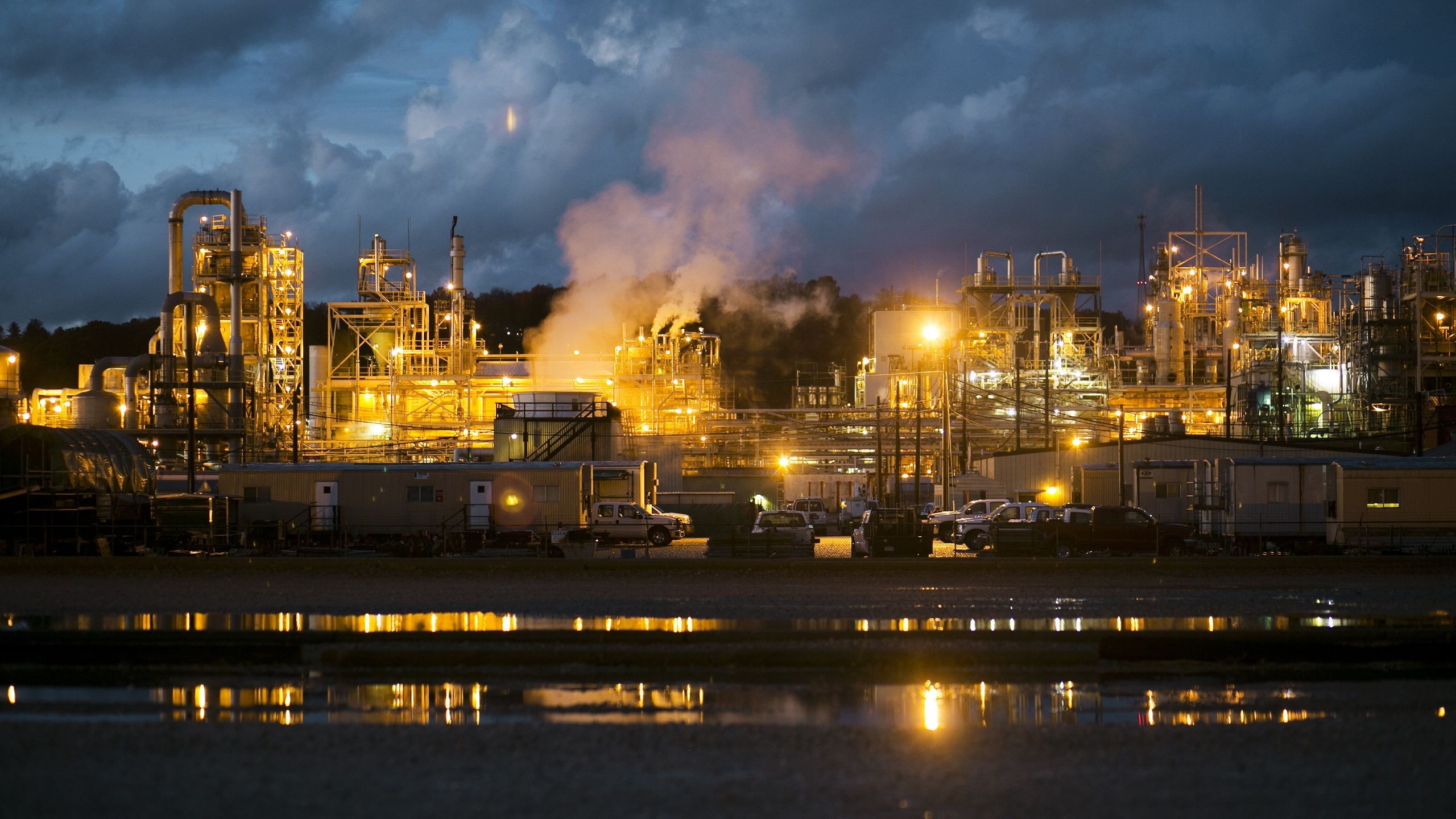
For decades, a silent and invisible threat has been weaving itself into the very fabric of modern life. They are in our nonstick pans, our waterproof jackets, our makeup, and even our food packaging. They are PFAS —perfluoroalkyl and polyfluoroalkyl substances—more commonly known as “forever chemicals.”
As investigative journalist Mariah Blake reveals in her forthcoming book, They Poisoned the World, these substances are a paradox: they are marvels of engineering that have enabled everything from space travel to lifesaving medical devices, yet they may be among the most insidious pollutants in human history.
The Science of Persistence
What makes PFAS so uniquely dangerous is their chemical structure. They are built on carbon-fluorine bonds, which are among the strongest in organic chemistry. This strength makes them incredibly useful because they resist heat, water, grease, and corrosion.
However, that same strength is their greatest environmental flaw. Unlike most pollutants that eventually break down, PFAS are “forever.” They do not degrade. Instead, they accumulate:
– In the environment: They have been found in the most remote corners of the Earth, from the peaks of Mount Everest to the depths of the ocean.
– In the human body: They are “proteinophilic,” meaning they bind tightly to proteins in our blood, livers, kidneys, and lungs.
Today, PFAS are present in the bloodstream of nearly every human being on the planet.
A Legacy Born of Secrecy
The history of PFAS is inextricably linked to one of the most secretive chapters of the 20th century: The Manhattan Project.
While PFAS were being developed in labs as early as the 1930s, they were moved into mass production in 1943 to assist in separating uranium isotopes for the creation of the atomic bomb. This military necessity created a veil of secrecy that would have devastating consequences for public health.
As early as the 1940s, the dangers were apparent. Downstream from manufacturing plants, farmers reported “burning” crops and livestock so crippled they could only move by crawling. Despite these red flags, the involvement of the Manhattan Project meant that early warnings were suppressed, delaying public awareness by half a century.
The Corporate Calculation: Profit Over People
Following WWII, companies like 3M and DuPont transitioned PFAS from military use to mass-market commercial products like Teflon and Scotchgard. However, internal documents reveal that these corporations knew the risks long before the public did.
By the 1960s and 70s, industry research had already linked PFAS to:
* Organ damage and cancer (including kidney and prostate cancer).
* Immune system suppression.
* Birth defects, including facial deformities in both lab animals and human workers.
Despite this, rather than alerting regulators, companies made a “cold calculation.” They determined that the cost of installing filtration systems to prevent environmental runoff was higher than the projected cost of future legal liabilities. They chose to continue polluting, betting that they could outrun the consequences.
The Regulatory Gap and the “Big Tobacco” Playbook
Why did it take so long for the world to react? Blake points to two systemic failures:
- Grandfathering Laws: In the United States, many chemicals were “grandfathered” into the market, meaning they were presumed safe without rigorous modern testing. Unlike Europe, which follows the precautionary principle (restricting substances if danger is suspected), the U.S. system placed the burden of proof on regulators rather than manufacturers.
- Disinformation Campaigns: Once the contamination became public—largely due to lawsuits from farmers in places like West Virginia—the chemical industry deployed a strategy similar to that of Big Tobacco. They funded “independent” think tanks, hired scientists to downplay risks, and flooded Congress with lobbyists to stall regulation.
The Current Reality: A Moving Target
Today, the crisis is evolving. As older, well-studied chemicals like PFOA are phased out due to regulation, manufacturers are switching to shorter-chain fluorocarbons.
The problem is that these new variations are often not disclosed, and their long-term health impacts remain largely unknown. We are essentially replacing one set of “forever chemicals” with another, often without knowing the full extent of the damage.
“The EPA has essentially said there is no safe level of exposure to these chemicals,” Blake notes, highlighting a terrifying reality: even at levels near the limit of detection, these substances pose a threat to human health.
Conclusion
The story of PFAS is a cautionary tale of how industrial utility can mask environmental catastrophe. As these chemicals continue to circulate through our ecosystems and bodies, the global community faces the daunting task of managing a pollution crisis that was decades in the making and may never truly go away.